A Ciência e a Arte da Seleção de Materiais
Para criar um palito de fio dental verdadeiramente eficaz, a seleção dos materiais é como criar um equipamento sob medida para um atleta: ele precisa ser resistente o suficiente para suportar as exigências do uso, mas macio o bastante para um manuseio confortável. Vamos começar com o cabo de plástico que seguramos. Seu material está longe de ser simples. Os dois materiais mais comuns são o polipropileno (PP) e o policarbonato (PC), que soam complexos, mas na verdade são plásticos de qualidade alimentar. O polipropileno é como o material usado em seus recipientes plásticos para alimentos em casa — leve e durável, resistente a quebras mesmo com o uso diário; o policarbonato é ainda mais avançado, um "parente" do vidro à prova de balas, com dureza e transparência superiores, além de permitir um acabamento fosco antiderrapante. Durante a moldagem por injeção em alta temperatura, os intrincados padrões ondulados no molde são projetados para corresponder à curvatura dos dedos humanos, fazendo com que pareça uma luva feita sob medida em sua mão.
A parte que realmente entra no espaço entre os dentes — o próprio fio dental — exige uma seleção de materiais ainda mais meticulosa. O fio dental de nylon tradicional é como uma "deusa de mil braços", composto por milhares de fibras mais finas que a teia de aranha, cada uma com um diâmetro de apenas 0,01 milímetros. A genialidade dessa estrutura reside em sua capacidade de se dividir naturalmente ao encontrar resistência, como uma palha de aço limpando uma panela, removendo eficazmente os resíduos entre os dentes. No entanto, cada vez mais pessoas estão usando fio dental monofilamento de PTFE. Você talvez nunca tenha ouvido falar desse material, mas o revestimento da sua panela antiaderente é um parente próximo. Ele é incrivelmente liso, permitindo que deslize facilmente até mesmo nos espaços mais apertados entre os dentes, e não desfia nem irrita a gengiva. Recentemente, alguns fabricantes desenvolveram até mesmo fio dental feito de amido de milho. Embora custe três vezes mais que o fio dental comum, ele se decompõe no solo em até seis meses após o uso, tornando-o ideal para jovens com consciência ambiental. Resumindo, embora um palito de fio dental possa ser pequeno, a complexidade dos materiais que o compõem não é menor do que a de uma capa de smartphone!
Engenhosidade em nível milimétrico no projeto estrutural
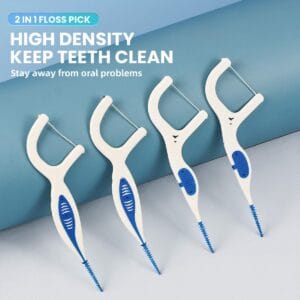
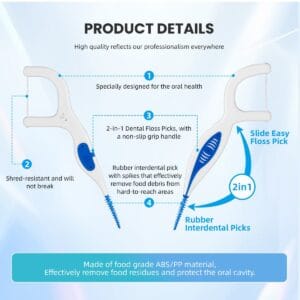
O design estrutural de um palito de fio dental é como construir o esqueleto de um Transformer: precisa ser flexível e incrivelmente estável. Não se deixe enganar pelo seu formato simples em Y; a engenharia por trás dele é muito mais complexa do que peças de Lego. Veja, por exemplo, o pequeno arco curvo. Seu ângulo de curvatura foi meticulosamente determinado por engenheiros usando réguas – entre 110 e 130 graus. Essa faixa não foi escolhida aleatoriamente. Tente imitar o ângulo com o seu cotovelo; é aproximadamente o ângulo natural do pulso ao comer com pauzinhos. Isso facilita o uso e evita que você cutuque acidentalmente a garganta e cause engasgos, tornando-o especialmente fácil de usar para iniciantes.
O design mais bem pensado é o da versão infantil. Os engenheiros reduziram o diâmetro do cabo de 12 milímetros para 8 milímetros, o equivalente a uma redução de um terço na espessura, permitindo que as pequenas mãos das crianças o segurem com segurança. A curvatura também incorpora uma estrutura de amortecimento semelhante a uma mola. Mesmo que uma criança use força excessiva, esse dispositivo de amortecimento absorve 30% da força, como se estivesse dando às gengivas um par de sapatos com amortecimento a ar. Ainda mais engenhoso, algumas marcas projetam a ponta do fio dental no formato de orelhas de urso, impedindo que o cabo inteiro escorregue para dentro da boca e tornando a escovação divertida para as crianças, como um brinquedo. Essas mudanças aparentemente pequenas são o resultado da observação de milhares de crianças escovando os dentes. Portanto, este pequeno fio dental é fruto do cuidado meticuloso e da atenção dos engenheiros!
Fabricação de precisão totalmente automatizada
Entrar numa fábrica moderna de palitos de fio dental é como entrar num museu de tecnologia futurista. Grânulos de plástico passam por uma “transformação” na oficina de moldagem por injeção: a matéria-prima, do tamanho de grãos de arroz, é aquecida a 160 °C (mais quente que uma panela fervendo), transformando-se numa substância pegajosa, semelhante a xarope, que é então injetada rapidamente num molde. Este molde é incrivelmente preciso, resfriando e solidificando em apenas 0,8 segundos após o fechamento – mais rápido do que três piscadas de olhos. Um único molde pode produzir 200.000 palitos por dia, cada um com um erro dimensional de no máximo um quinto da espessura de um fio de cabelo humano – uma diferença tão sutil que não seria possível medi-la com um paquímetro.
Na oficina de estiragem, o filamento de náilon passa por um "milagre de afinamento". Os grossos filamentos brutos são primeiro amolecidos em um banho de água quente, depois esticados e aquecidos por três conjuntos de mãos invisíveis (sistemas de controle de tensão) – ar quente a 300 °C sopra sobre eles, como se estivessem recebendo uma sessão de ioga em alta temperatura. Os filamentos finos resultantes têm um diâmetro de apenas 0,15 a 0,2 milímetros, mais finos que um cílio. Esse processo é cem vezes mais difícil do que fazer macarrão puxado à mão; um pequeno erro pode fazer com que o filamento se quebre em minúsculos pedaços.
Na impressionante linha de montagem, braços robóticos se movem mais rápido que mata-moscas. Eles pegam com precisão 5 pedaços de fio dental por segundo, inserindo-os nas ranhuras dos cabos de plástico como se estivessem brincando em uma máquina de pegar bichinhos de pelúcia. A máquina de solda a laser que fixa o fio dental é ainda mais incrível, usando uma força precisa de 0,01 Newtons – aproximadamente a força necessária para segurar uma batata frita sem quebrá-la, garantindo uma solda forte sem queimar o delicado filamento. Toda a linha de produção é incrivelmente eficiente, produzindo 100.000 peças por hora, em média uma peça a cada 15 segundos, mais rápido do que enviar uma mensagem de voz no celular.
Testes de segurança extremamente rigorosos
Os palitos de fio dental recém-saídos da linha de produção passam por uma “entrevista de emprego” ainda mais rigorosa do que uma candidatura a um cargo público. Na sala de testes microbiológicos, eles são imersos coletivamente em um líquido especial, como uma “sauna”, e após 48 horas, são examinados ao microscópio para contagem de bactérias – o padrão de aprovação é de no máximo 100 bactérias por grama, o que é ainda mais rigoroso do que os padrões de higiene para água mineral engarrafada. Em seguida, eles vão para a sala de testes físicos, onde braços robóticos atuam como “maníacos da dobra”, agarrando os palitos de fio dental e dobrando-os 500 vezes, simulando a intensidade de alguém usando fio dental todos os dias durante três anos. Qualquer rachadura resulta na rejeição de todo o lote.
O teste mais empolgante é o de resistência à tração, no qual o fio dental precisa suportar uma lata de refrigerante por 10 segundos sem romper – uma força duas vezes maior que a usada ao escovar os dentes com fio dental. São esses procedimentos de teste precisos que permitem que esses pequenos itens baratos resistam à lavagem com água a 40 °C e permaneçam em um banheiro úmido por dois anos sem mofar. Da próxima vez que você usar um fio dental, estará segurando um guardião da higiene bucal que passou por dezoito “testes diabólicos”! Uma nova inovação na fabricação sustentável.
Hoje em dia, todos os fabricantes de fio dental estão se transformando em “especialistas em meio ambiente”. Eles estão começando a usar resíduos vegetais, como bagaço de cana-de-açúcar e talos de milho, para fabricar os cabos. Esse “plástico de origem vegetal” não só reduz as emissões de dióxido de carbono em 60% durante a produção, como também não libera gases tóxicos quando queimado, ao contrário dos plásticos comuns. Uma fábrica na Alemanha foi ainda mais longe, limpando os palitos de fio dental sem usar uma única gota de água, utilizando, em vez disso, dióxido de carbono em um estado especial. Isso equivale a limpá-los com um “gás mágico”, e essa única inovação economiza o equivalente a 20 piscinas olímpicas de água por ano.