Key Takeaways from This Article:
- Definition and functional principle of interdental brushes
- Biological rationale for interdental cleaning
- Types, sizes, and materials with clinical considerations
- Comparative analysis with dental floss, water flossers, and other tools
- Step‑by‑step methodology for correct use
- International standards and regulatory guidance
- Evidence from clinical studies and case applications
- Common errors and selection criteria
Proper oral hygiene requires addressing all tooth surfaces, including interdental spaces that are often inaccessible to standard toothbrush bristles. Interdental brushes serve a specialized role in mechanical plaque removal and in maintaining periodontal health, especially for patients with dental restorations or orthodontic appliances.
Table of Contents
Understanding Interdental Brushes
Conceptual Definition
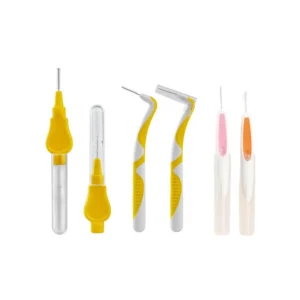
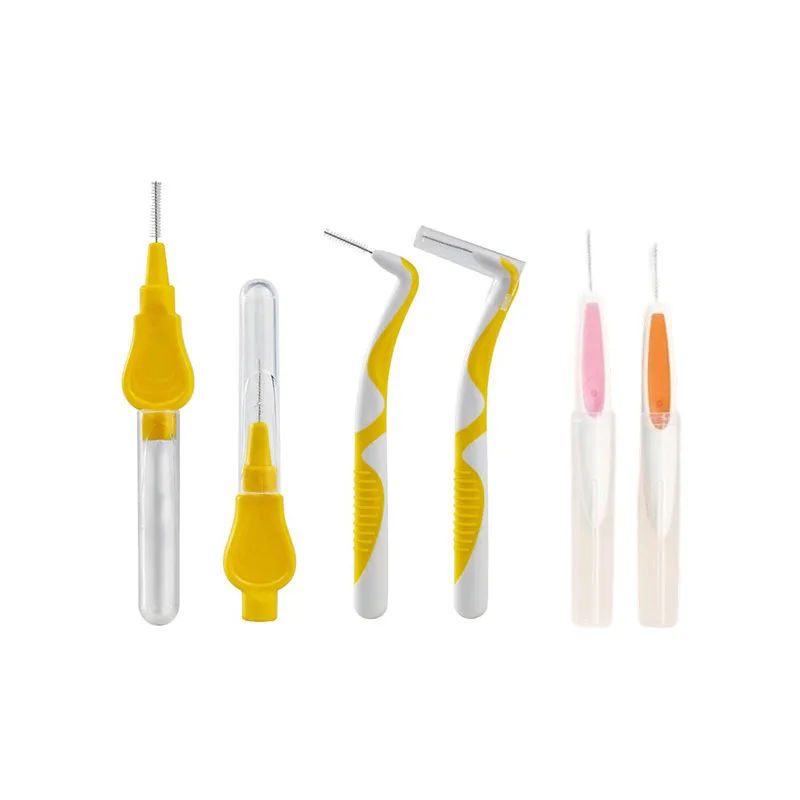
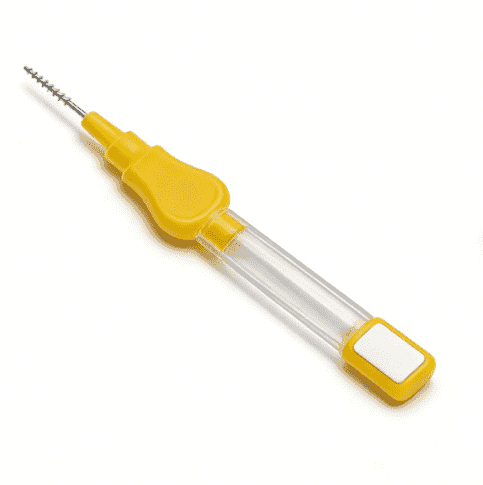
Interdental brushes are small cylindrical or conical brushes designed to clean the proximal surfaces between teeth. They consist of a flexible wire core covered by fine bristles arranged circumferentially. The core design ensures adaptability to different interdental spaces, while bristle density facilitates mechanical disruption of plaque biofilm.
Functional Mechanism
The primary mechanism of interdental brushes is plaque disruption. When inserted and moved gently between teeth, the bristles:
- Dislodge food particles trapped in interdental spaces.
- Mechanically disrupt microbial biofilm adherence to enamel and periodontal surfaces.
- Promote stimulated gingival circulation, contributing to gum health.
This mechanical action complements chemical cleaning via toothpaste and mouth rinses, particularly in areas where chemical diffusion is limited.
Biological Rationale for Interdental Cleaning
Interproximal regions are prone to plaque accumulation because they are structurally sheltered. Studies indicate that:
- Up to 40% of tooth surfaces are inadequately cleaned by brushing alone (Journal of Clinical Dentistry, 2022).
- Persistent plaque in these zones leads to gingivitis, periodontal pocket formation, and interproximal caries.
- Brushing combined with interdental cleaning reduces plaque index and bleeding on probing more effectively than brushing alone (International Journal of Dental Hygiene, 2021).
This highlights the necessity of mechanical interdental cleaning as a standard component of preventive oral care.
Types and Sizes of Interdental Brushes
Brush Morphology
- Straight Brushes: Optimal for accessible anterior teeth and wide interproximal spaces.
- Angled Brushes: Designed to reach posterior teeth and complex anatomies.
- Conical Brushes: Provide adaptability in variable-sized interdental spaces.
- Orthodontic Brushes: Specially designed to navigate brackets, wires, and bands.
Size Selection
| Brush Diameter | Clinical Application | Notes |
|---|---|---|
| 0.4–0.6 mm | Tight gaps | Minimal gingival irritation |
| 0.7–1.0 mm | Average spaces | Balanced plaque removal and comfort |
| 1.2–1.5 mm | Wide gaps, post-orthodontic | Supports biofilm disruption |
| 1.8–2.5 mm | Periodontal pocket cleaning | Requires careful insertion |
Proper size selection is essential. Using an oversized brush can cause gingival trauma, while an undersized brush may fail to remove plaque effectively.
Materials and Standards
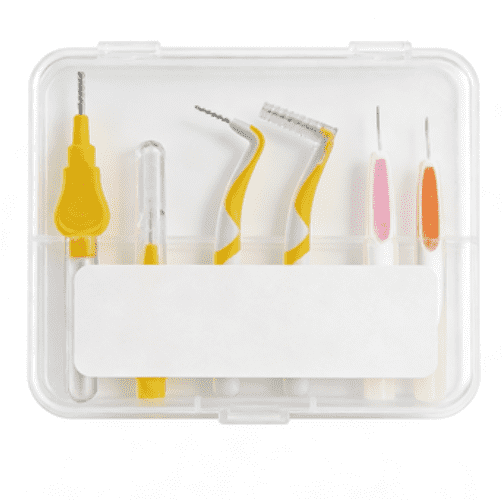
- Bristles: Typically nylon, arranged circumferentially to ensure full surface contact.
- Core Wire: Flexible stainless steel or coated alloy, ensuring resilience and adaptability.
- Handle Designs: Straight or angled handles allow ergonomic insertion.
Standards and Regulatory Guidance
While interdental brushes are considered dental devices, they are subject to guidance from:
- ISO 16409: Specifies dimensional tolerance and design criteria for interdental cleaning aids.
- ADA Seal of Acceptance: Ensures clinically tested safety and effectiveness.
- European CDC/WHO Recommendations: Encourage interdental cleaning for high-risk populations and orthodontic patients.
Compliance with these standards ensures consistent performance and reduced risk of gingival damage.
Comparative Analysis: Interdental Brushes vs Other Tools
| Tool | Target Area | Mechanism | Advantages | Limitations |
|---|---|---|---|---|
| Interdental Brush | Medium to large gaps, braces | Mechanical plaque disruption | Effective for wide spaces, gentle on implants | Less effective in ultra-tight spaces |
| Dental Floss | Tight contacts | Sliding between teeth | Penetrates narrow gaps | Requires technique; may cut gums |
| Water Flosser | Entire interdental area | Pulsating water jets | Non-traumatic, comfortable for sensitive gums | Less mechanical disruption |
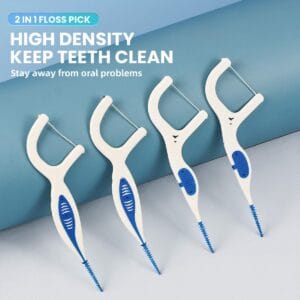
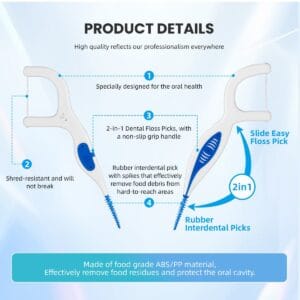
| Wooden Picks | Food debris removal | Pressure scraping | Quick, accessible | Limited plaque removal |
This comparison underscores the mechanical efficacy of interdental brushes for most clinical and home-use scenarios.
Correct Usage Methodology
- Select an appropriate brush size based on gap measurement or trial pack.
- Insert gently without force, avoiding gingival laceration.
- Move the brush back-and-forth 2–3 times, covering proximal surfaces circumferentially.
- Rinse bristles and store in a dry, clean container.
- Replace brushes weekly or when bristles deform.
Clinical observations indicate that correct insertion angle and motion are crucial for maximal biofilm removal and patient comfort.
Clinical Evidence and Case Applications
Gingival Health Improvement
A controlled study (Journal of Periodontology, 2023) demonstrated:
- Daily interdental brush use reduces gingival bleeding by 35–40% after six weeks.
- Improves patient-reported gum firmness and reduced inflammation.
Orthodontic Patients
In a study of 120 orthodontic patients:
- Plaque index reduced by 50% around brackets after 8 weeks of interdental brushing.
- Demonstrates the effectiveness in areas inaccessible to floss or toothbrushes.
Selecting the Right Interdental Brush
Key factors for professional recommendation:
- Gap dimension: Measure the interproximal space; use the largest comfortable size for effective cleaning.
- Bristle density: Soft for sensitive gums; medium for routine prophylaxis.
- Handle ergonomics: Angled handles facilitate posterior reach; straight handles are suitable for anterior teeth.
- Patient compliance: Simple design improves regular usage.
Common Mistakes
- Forcing oversized brushes, causing gingival trauma.
- Using the same brush for too long; bristles lose efficacy.
- Ignoring posterior teeth and molar regions.
FAQ
What is the primary mechanism of interdental brushes?
They mechanically disrupt plaque biofilm, removing bacteria and food debris where toothbrush bristles cannot reach.
How do interdental brushes complement floss?
They are particularly effective in medium to large gaps, while floss remains ideal for tight contacts, providing a complete interdental cleaning strategy.
Are interdental brushes recommended for implants and bridges?
Yes. Properly sized brushes minimize peri-implant plaque accumulation and reduce the risk of gingivitis around prosthetic devices.
What standards ensure safety and efficacy?
Look for ISO 16409 compliance and ADA Seal of Acceptance, which indicate reliable clinical performance.
Conclusion
Interdental brushes represent a conceptually essential component of modern oral hygiene, providing mechanical plaque removal, biofilm control, and gingival stimulation. Their selection should be guided by gap size, patient comfort, and clinical indications, and usage must adhere to standardized protocols. Clinical evidence confirms that routine use reduces gingival bleeding, supports periodontal health, and complements traditional brushing and flossing.
Brands like YINGSHIKE, alongside established international products, offer a variety of sizes, materials, and ergonomic designs, allowing both professional and household users to optimize oral care. The integration of interdental brushes into daily routines is supported by research, regulatory guidance, and clinical practice, establishing them as indispensable tools in preventive dentistry.
Stay Connected! 🌟
Thanks for reading! If you enjoyed this article, don’t forget you can follow me on social media for more insights, updates, and behind-the-scenes content:
Facebook – Join the conversation and get the latest updates
YouTube – Watch tutorials, demos, and in-depth guides
Instagram – See tips, visuals, and daily inspiration
Let’s continue learning and growing together—stay connected and never miss a beat!