Índice
Introdução
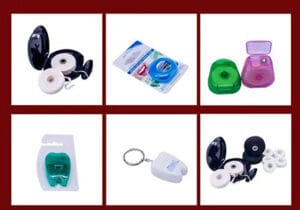
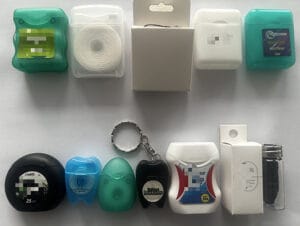
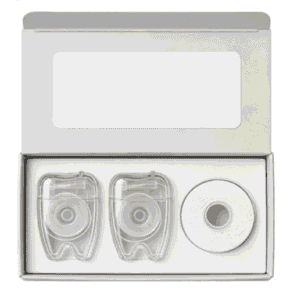
Customized dental floss allows oral care brands to develop a product around their target users rather than relying on a completely standardized floss specification. Material, strand structure, thickness, coating, flavor, floss length, dispenser design, branding, and packaging can all influence how the finished product performs and how it is positioned in the market.
For private-label brands, distributors, pharmacies, dental care companies, and oral care product developers, successful customization starts before the logo is printed. The first step is defining the intended user, expected flossing experience, target market, and product format.
A useful development process therefore follows a clear sequence:
product positioning → floss material → strand structure → thickness → coating → sensory options → dispenser → packaging → sample evaluation → production quality control.
This approach helps turn customized dental floss into a defined oral care product rather than simply a standard floss roll with different packaging.
O que é fio dental personalizado?
Customized dental floss is dental floss developed according to a brand’s selected product specifications and packaging requirements.
Customization can involve visible features such as color, flavor, dispenser style, logo, and package design, but meaningful product development goes deeper.
The floss itself can differ in material, filament structure, surface treatment, diameter, texture, tensile characteristics, glide, and length.
For example, two dental floss products may both use nylon while providing noticeably different user experiences because their strand density, thickness, wax treatment, texture, and construction are different.
This distinction matters for B2B buyers.
A private-label program should therefore specify the intended performance of the floss rather than treating material selection as the only technical decision.
Por que as marcas de higiene bucal personalizam o fio dental
Customization allows brands to align the product with a defined market position.
A product developed for users with tight tooth contacts may prioritize a smooth surface and controlled strand thickness. Another range may emphasize a fuller or more textured feel. A travel-oriented product may focus on a compact dispenser, while a broader oral hygiene range may require packaging that visually matches floss picks, interdental brushes, or tongue cleaners.
For B2B product development, customization can help create differences in several areas:
| Development Area | Possible Customization Direction |
|---|---|
| Material fio | Nylon, monofilament or other suitable options |
| Strand structure | Multifilament, smooth or textured formats |
| Espessura | Adjusted for target application |
| Surface treatment | Waxed, unwaxed or other coatings |
| Sabor | Mint or other suitable sensory options |
| Floss length | Adapted to product positioning |
| Floss color | Matched with brand or product concept |
| Dispensador | Shape, size, color and cutting structure |
| Marca | Logo and visual identity |
| Embalagem | Retail box, label and supporting materials |
The important point is that these choices should work together.
Adding more customizable features does not automatically create a better product. Each feature should support a defined user need or market position.
Comece com o usuário alvo
One of the most common mistakes in private-label development is choosing specifications before clearly defining who the product is for.
A useful product brief should answer several questions:
Who is expected to use the floss?
Are tight interdental contacts a major consideration?
Should the floss feel particularly smooth or provide a fuller texture?
Is the product intended for everyday household use, travel, retail oral care sets, pharmacies, dental channels, or another application?
Should flavor play an important role in the experience?
Will the dental floss be sold independently or as part of a wider oral hygiene range?
Answers to these questions guide later decisions about filament material, strand thickness, dispenser size, and packaging.
Without this step, customization can become a collection of unrelated options rather than a coordinated product concept.
Escolhendo o material do fio dental
Material selection is one of the first technical decisions.
Traditional dental floss commonly uses multifilament nylon, while other products can use smoother monofilament-style structures. Alternative fibers may also be considered depending on the intended product concept and documented material characteristics.
Each construction provides different possibilities.
Nylon is particularly versatile because multiple fine filaments can be combined and processed to create different thicknesses, textures, coatings, and surface sensations.
A smooth monofilament-style product may provide a lower-friction experience and can be positioned differently.
For brands developing customized dental floss products, material should therefore be evaluated together with the required strand structure and user experience instead of selected independently.
Multifilament vs Fio de Monofilamento
The distinction between multifilament and monofilament construction affects both performance and positioning.
Multifilament floss consists of multiple fibers combined into a strand. The construction can create flexibility and allows variation in texture and thickness.
Monofilament-style floss uses a more unified structure and can provide a smoother surface.
Neither construction is automatically suitable for every product.
| Characteristic | Multifilament Floss | Monofilament-Style Floss |
|---|---|---|
| Estrutura | Multiple fine fibers | More unified filament |
| Sensação superficial | Can range from smooth to textured | Commonly smoother |
| Thickness options | Highly adjustable | Depends on construction |
| Texture development | Flexible | More limited |
| Fraying behavior | Depends strongly on strand construction | Generally different from multifilament structures |
| Product positioning | Traditional, textured or specialty formats | Smooth-glide concepts |
The appropriate choice depends on the product brief.
Samples should be physically evaluated because material descriptions alone cannot fully communicate glide, flexibility, hand feel, or strand behavior.
Espessura do fio dental é importante
Thickness directly affects how dental floss feels between teeth.
For products intended for tighter contacts, excessive thickness can make insertion more difficult. A thinner strand may move more easily, but strength and handling still need to remain appropriate.
For wider spaces or users who prefer a fuller cleaning sensation, a more substantial strand may create a different experience.
Manufacturers therefore need to control not only the target thickness but also consistency along the floss.
Variation within the same spool can create an uneven user experience.
For private-label buyers, sample evaluation should include multiple sections of floss rather than testing only a short length from one point in the dispenser.
Opções enceradas e não enceradas
Surface treatment can significantly influence handling.
Waxed dental floss may offer a different glide and feel compared with an unwaxed structure. Coating can also interact with flavor and other sensory elements.
However, the choice should be based on the intended product experience rather than assuming that one format is universally superior.
A product specification should consider:
- strand material;
- surface treatment;
- coating consistency;
- floss thickness;
- target user;
- desired glide;
- flavor requirements.
These characteristics need to be tested together.
A coating that performs well on one strand structure may create a noticeably different result when the material or thickness changes.
Personalização Sabor
Flavor is one of the most recognizable customization options in dental floss.
Mint remains common because it fits naturally with oral care positioning, but flavor intensity itself can also vary.
Brands should determine whether they want the flavor to be subtle, noticeable, or an important part of the product identity.
Consistency is especially important.
The first part of a spool should not provide a noticeably different sensory experience from later sections. The coating and packaging system therefore need to support stable product characteristics.
Flavor should also remain secondary to core functional requirements such as strand integrity, controlled thickness, glide, and handling.
Comprimento de fio dental personalizado
The amount of floss inside each dispenser influences both product format and packaging.
Different markets and product concepts may require different spool lengths.
The selected length affects:
dispenser dimensions;
internal spool configuration;
label information;
packaging dimensions;
product positioning;
outer carton arrangement.
For this reason, floss length should be confirmed relatively early during development.
Changing it after the dispenser and package have been finalized may require changes to other components.
Dispensadores de fio dentário personalizados
The dispenser is an important part of the finished dental floss product.
Consumers interact with it every time they use the floss, so features such as opening, closing, strand feeding, cutting, grip, and portability all contribute to the experience.
Important dispenser variables can include:
overall dimensions;
shape;
plastic material;
color;
transparency;
opening method;
spool capacity;
cutter position;
logo placement;
label area.
The cutter deserves particular attention.
It needs to separate the floss reliably without requiring excessive force or leaving an inconvenient strand end.
The position of the cutter should also allow users to pull and cut floss naturally.
Branding e Personalização de Logotipos
Private-label development often includes custom branding on the dispenser, packaging, or both.
However, branding should be coordinated with the actual available surface area.
Dental floss dispensers are compact, so a logo that works well on a website or large carton may become difficult to read when reduced to dispenser size.
Brands should therefore evaluate logo dimensions on physical samples.
The retail box provides additional space for product information, instructions, branding, barcodes, and market-specific text.
A coordinated visual system between the dispenser and outer packaging generally creates a more consistent result than treating each component separately.
Embalagem Fio Dentário Personalizado
Packaging should be designed after the main product specifications are sufficiently stable.
A change in dispenser dimensions can affect the retail box. A change in the number of units per set can influence the outer packaging. A different sales channel may also require a different package structure.
Packaging development can consider:
retail box dimensions;
inner product arrangement;
printing;
brand colors;
logo;
usage instructions;
product specifications;
barcode position;
market language;
outer carton configuration.
For brands planning multiple oral care products, packaging can also create consistency across dental floss, floss picks, interdental brushes, tongue cleaners, and other related products.
This is particularly useful for private-label ranges intended to appear as one coordinated oral care family.
Reivindicações de sustentabilidade exigem evidências específicas
Environmental positioning has become increasingly relevant in oral care product development, but claims need to match the actual material and product configuration.
Terms such as plastic-free, biodegradable, recycled, recyclable, or environmentally friendly should not be treated as interchangeable.
A floss filament, dispenser, retail package, and outer carton may all use different materials.
Changing one component therefore does not necessarily justify a broad claim about the complete finished product.
B2B buyers should request clear material information and determine which component a sustainability statement refers to.
Specific descriptions are generally more useful than vague environmental terminology.
For example, describing the material used in a particular packaging component is clearer than applying a broad sustainability statement to the entire product without adequate support.
Os requisitos regulamentares devem ser considerados antecipadamente
The destination market should be identified before finalizing a customized dental floss product.
Different markets may apply different requirements to product classification, labeling, manufacturing documentation, claims, and market entry.
In the United States, the FDA classification database identifies dental floss under product code JES and 21 CFR 872.6390 as a Class I dental device. The FDA database currently lists this classification as 510(k)-exempt, although applicable registration, listing, labeling, manufacturing, and other requirements still need to be evaluated for the specific market situation.
This is why regulatory considerations should not be postponed until packaging has already been printed.
The target market can influence labeling content, documentation, claims, and other aspects of the finished product.
Brands entering multiple countries may therefore need different packaging versions even when the core floss specification remains the same.
O que deve ser confirmado antes da amostragem?
A useful development brief should provide enough information for the first sample to represent the intended product.
Before sampling, buyers should ideally confirm:
| Item | Key Question |
|---|---|
| Mercado alvo | Where will the product be distributed? |
| Target user | What flossing experience is required? |
| Material | Which filament structure is preferred? |
| Espessura | Thin, standard, fuller or another target? |
| Superfície | Smooth, textured, waxed or unwaxed? |
| Sabor | Is flavor required? |
| Comprimento | How much floss should each dispenser contain? |
| Dispensador | What size, structure and color are required? |
| Marca | Where will the logo appear? |
| Embalagem | What retail format is required? |
| Language | Which market languages are needed? |
| Product claims | Which statements require supporting documentation? |
A more complete brief generally produces a more useful first sample.
It also reduces the risk of evaluating a sample that does not accurately represent the intended final product.
Como avaliar uma amostra de fio dental
Sample evaluation should go beyond appearance.
The floss needs to be physically handled and tested for characteristics that cannot be understood from photographs.
Buyers can evaluate several areas.
Consistência Strand
Check whether the floss maintains a consistent diameter and appearance along different sections of the spool.
Deslizar
Evaluate how smoothly the strand moves through representative contact spaces without becoming excessively slippery or difficult to control.
Força
Apply normal pulling tension and observe whether the strand breaks prematurely.
Desgastando
Check whether individual fibers separate excessively during normal handling.
Revestimento
Confirm whether wax or other surface treatments appear uniform.
Sabor
Evaluate whether the sensory intensity matches the intended positioning.
Desempenho do dispensador
Check spool rotation, opening, closure, floss feeding, and cutting.
Embalagem
Review dimensions, printing, branding, product fit, and overall presentation.
These checks help turn subjective feedback such as “make it better” into specific development instructions.
Controle de qualidade para fio dental personalizado
Customization increases the number of variables that need to remain consistent during production.
For a standardized product, fewer specifications may need to be controlled. A custom program may introduce special material, color, flavor, length, dispenser components, labels, and packaging.
Quality control should therefore be connected directly to the approved specification.
Potential inspection items include:
floss material;
strand thickness;
strand appearance;
tensile performance;
resistência ao desgaste;
coating consistency;
consistência de sabor;
floss length;
dispenser dimensions;
cor do dispensador;
cutter performance;
logo position;
packaging dimensions;
printing accuracy;
finished product quantity.
The approved sample should serve as an important reference, but written specifications are equally necessary.
Production teams need measurable requirements rather than relying only on visual memory of the sample.
Por que a consistência do lote é importante
A strong private-label product needs to provide a similar experience across repeated production batches.
If floss thickness, coating, flavor, dispenser function, or packaging appearance changes substantially from one batch to another, users may perceive the brand itself as inconsistent.
Batch consistency becomes especially important when products are distributed through multiple markets or retail channels.
Brands should therefore evaluate a manufacturing partner not only on whether an attractive sample can be produced, but also on whether the specification can be reproduced consistently.
Manufacturing documentation, incoming material control, in-process checks, and final inspection all contribute to this goal.
Desenvolvendo uma linha completa de produtos de higiene bucal
Customized dental floss can also be developed as part of a wider oral care range.
Instead of treating floss as an isolated SKU, brands can coordinate it with floss picks, interdental brushes, tongue cleaners, or toothpick products.
A unified product line may share:
brand colors;
packaging architecture;
logo placement;
material positioning;
market language;
product claims;
retail presentation.
The physical structure of each product will still differ, but consistent branding helps consumers recognize that the products belong to the same range.
For B2B buyers, developing several related products with an OEM/ODM manufacturer can also make it easier to coordinate product specifications and packaging standards across the range.
Perguntas a fazer a um fabricante personalizado de fio dental
Choosing a manufacturing partner requires more than confirming whether customization is available.
B2B buyers should ask practical questions such as:
What floss materials and structures can be produced?
Can thickness and surface treatment be adjusted?
What flavor options are available?
Can the dispenser be customized?
Can the dispenser color and branding be changed?
What packaging formats are supported?
How are samples evaluated before production?
Which quality characteristics are controlled?
How is specification consistency maintained between production runs?
Can packaging be adapted for different target markets?
What documentation can be provided for materials and manufacturing requirements?
The quality of these answers gives buyers a clearer understanding of whether the supplier is simply offering existing products or can support genuine product development.
Fluxo de trabalho personalizado de desenvolvimento de fio dental
A structured workflow makes the development process easier to control.
1. defina o posicionamento do produto
Establish target users, market, product format, and desired user experience.
2. selecione a estrutura do fio dental
Determine material, filament construction, thickness, texture, and surface treatment.
3. defina recursos sensoriais
Confirm flavor, color, and other product characteristics.
4. selecione o dispensador
Determine spool capacity, shape, color, cutter, and branding area.
5. desenvolver embalagens
Coordinate the finished dispenser dimensions with box structure, artwork, and market information.
6. Produzir amostras
Create physical samples that represent the proposed product specification.
7. avaliar e ajustar
Review performance, dimensions, appearance, dispenser function, and packaging.
8. Aprovar a Especificação Final
Record material, dimensions, artwork, packaging, and performance requirements.
9. Control Production Quality
Compare production output against the approved specification and reference samples.
Following this sequence prevents later design decisions from contradicting earlier product requirements.
Customized Dental Floss B2B Checklist
Before finalizing a private-label dental floss project, buyers can use the following checklist:
| Area | Confirm Before Production |
|---|---|
| Product concept | Target user and positioning |
| Material fio | Approved filament type |
| Construção | Multifilament or selected alternative |
| Espessura | Approved target specification |
| Superfície | Waxed, unwaxed, smooth or textured |
| Sabor | Approved type and intensity |
| Comprimento | Floss length per dispenser |
| Dispensador | Size, color, cutter and structure |
| Marca | Logo size and position |
| Embalagem | Material, structure and artwork |
| Market | Destination and required labeling |
| Claims | Supporting information available |
| Controle qualidade | Key inspection standards defined |
| Reference sample | Final sample formally approved |
This checklist gives product developers, designers, manufacturers, and quality teams a shared reference point.
Conclusão
Customized dental floss development involves much more than adding a private-label logo to an existing product.
Material, filament construction, thickness, coating, texture, flavor, length, dispenser design, branding, packaging, target market, and quality requirements all influence the finished result.
For B2B oral care brands, the most effective approach is to begin with the target user and product positioning. Technical specifications can then be developed around the experience the brand wants to provide.
Physical sampling remains essential because characteristics such as glide, texture, fraying, dispenser handling, and flavor cannot be evaluated accurately from a specification sheet alone.
Once the final sample is approved, clear production standards and quality control help ensure that the same product experience can be reproduced across future batches.
Customization therefore works best when it is treated as a coordinated product-development process rather than a collection of visual branding options.
Perguntas frequentes
What can be customized on dental floss?
Dental floss customization can include filament material, strand construction, thickness, surface treatment, wax, flavor, color, floss length, dispenser dimensions, dispenser color, logo, label, retail packaging, and market-specific information. The available options should be selected according to the intended user and product positioning rather than simply maximizing the number of custom features.
What should a private-label brand prepare before developing dental floss?
A brand should define its target market, target user, preferred floss experience, material requirements, thickness, coating, flavor, floss length, dispenser preferences, branding, packaging format, and expected product claims. Providing this information before sampling makes it easier to create a sample that represents the intended final product.
How should customized dental floss samples be evaluated?
Samples should be checked for strand consistency, glide, strength, fraying resistance, coating, flavor, floss length, dispenser operation, cutting performance, branding, and packaging. Testing several sections of the spool provides a better indication of product consistency than evaluating only a short strand.
Can dental floss packaging also be customized?
Yes. Packaging can be developed around the final dispenser dimensions, branding, market language, barcode requirements, instructions, product information, and retail positioning. Packaging should generally be finalized after the main floss and dispenser specifications are stable to reduce the risk of structural changes later.
Why is quality control important for private-label dental floss?
Customized products contain multiple brand-specific variables that must remain consistent between production batches. Changes in strand thickness, coating, flavor, dispenser operation, printing, or packaging may alter the user experience. Clear specifications and defined inspection standards help maintain consistency with the approved sample.
Develop Customized Dental Floss for Your Brand
Private-label dental floss development is most effective when material, strand structure, dispenser, branding, and packaging are planned as one product system rather than separate decisions.
Richsource supports OEM/ODM oral care product development from product specifications through packaging and production. Brands developing a new floss range can use the company’s contact page to discuss target markets, dental floss specifications, branding, and packaging requirements.