Table of Contents
Key Takeaways
- Safe dental teeth cleaning tools should remove plaque without cutting, scraping, or damaging the gums.
- A complete home routine normally combines a toothbrush with floss, floss picks, interdental brushes, or other tools for cleaning between teeth.
- Dental floss is generally suitable for tight tooth contacts, while interdental brushes are often easier to use in wider spaces.
- Tongue scrapers can complement tooth and interdental cleaning by helping remove coating from the tongue.
- Sharp metal scalers and professional scraping instruments should not be used at home without professional training.
- The safest tool is not always the most powerful one; it is the tool that fits the user’s mouth and can be controlled comfortably.
- People with braces, implants, bridges, sensitive gums, or persistent bleeding should ask a dentist or dental hygienist which tool and size to use.
- Oral care brands and distributors should evaluate material safety, handle design, packaging hygiene, target users, and instructions before purchasing home-care products.
A toothbrush is the foundation of daily oral care, but it cannot clean every surface inside the mouth. Food particles and plaque can remain between teeth, around dental work, and along areas that are difficult for toothbrush bristles to reach.
That is why many consumers now build a more complete routine using several dental teeth cleaning tools. These products may include dental floss, floss picks, interdental brushes, tongue scrapers, and water flossers.
However, not every product marketed as a home dental tool is suitable for unsupervised use. Sharp scraping instruments, poorly sized brushes, rough toothpicks, and overly aggressive cleaning devices may irritate soft tissue or damage existing dental work.
This guide explains how to identify safe dental teeth cleaning tools, compare common options, and create a practical home routine without trying to replace professional dental care.
What Makes Dental Teeth Cleaning Tools Safe?
Safety depends on more than the material printed on a product label. The shape, flexibility, size, hygiene, and intended use of the tool all affect how safely it can be used.
Good dental teeth cleaning tools should make controlled cleaning easier. They should not require excessive force, complicated movements, or direct scraping of the tooth surface with a sharp edge.
Safety by Design
A safe oral care product is designed around normal hand movements and the anatomy of the mouth. It should help users reach the intended area while reducing the chance of slipping into the gums.
Rounded Contact Surfaces
Handles, picks, brush tips, and tongue cleaners should have smooth surfaces without sharp burrs or exposed edges. Rounded contact areas are especially important for products intended for children, older adults, and first-time users.
Flexible Working Parts
Controlled flexibility allows a floss pick, interdental brush, or tongue cleaner to follow oral contours. A product that is too rigid may be uncomfortable, while one that is too soft may not provide enough control.
Easy-Grip Handles
A stable grip reduces sudden movements. Ergonomic handles are helpful for users with limited hand strength, reduced dexterity, orthodontic appliances, or difficulty handling string floss.
Correct Sizing
Interdental spaces are not all the same size. An interdental brush that fits comfortably may clean effectively, but a brush that must be forced through the gap may irritate the gum or bend against dental restorations.
When uncertain, begin with a smaller size and ask a dental professional for guidance. Never assume that a larger brush produces a better result.
Hygienic Storage
Reusable dental teeth cleaning tools should be easy to rinse and dry. Moist, enclosed storage may allow residue to remain on the product, so reusable tools should be stored according to the manufacturer’s instructions.
Single-use floss picks and disposable items should not be shared. Products should also remain protected from dust and contamination before use.
Essential Dental Teeth Cleaning Tools for Home
A safe home routine does not require every tool on the market. Most users need a small number of well-selected products that serve different cleaning purposes.
1. Soft-Bristled Toothbrush
A toothbrush removes plaque from the exposed front, back, and chewing surfaces of teeth. Soft bristles are generally preferred for daily home use because they can clean effectively without encouraging aggressive scrubbing.
Both manual and electric toothbrushes may be suitable. The most important factors are comfortable control, complete surface coverage, and consistent use with fluoride toothpaste.
Best For
A soft-bristled toothbrush is essential for nearly every user. It should remain the primary tool in a home oral care routine rather than being replaced by specialized products.
2. Dental Floss Rolls
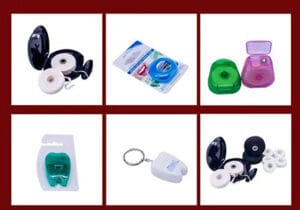
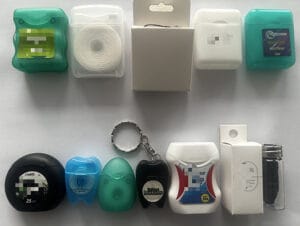
Dental floss is designed to slide through narrow contacts between adjacent teeth. It can wrap around the side of each tooth and clean areas that cannot be reached by a conventional toothbrush.
Richsource offers several dental floss options, including waxed, eco-friendly, biodegradable, and customizable floss rolls. Buyers can select materials and formats according to user comfort, packaging goals, and market positioning.
Waxed Dental Floss
Waxed floss usually slides more easily through tight contacts and may be easier for beginners to control. Its smooth surface can also reduce shredding when passing between closely spaced teeth.
Unwaxed Dental Floss
Unwaxed floss provides a different texture and may appeal to experienced users. However, it may fray more easily in very tight spaces or around rough dental restorations.
Dental Tape
Dental tape is broader and flatter than traditional floss. Some users find the wider surface comfortable, particularly when their gums are sensitive or their tooth spacing is less compact.
Readers who need a more detailed material comparison can visit the Advanced Guide to Types of Dental Floss.
3. Dental Floss Picks
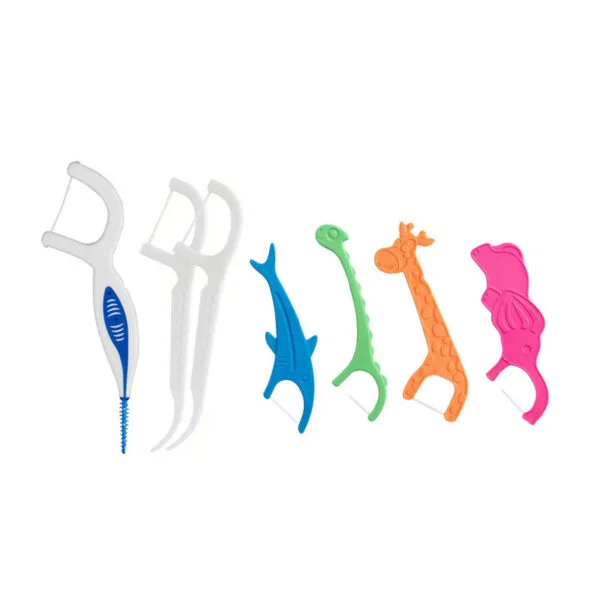
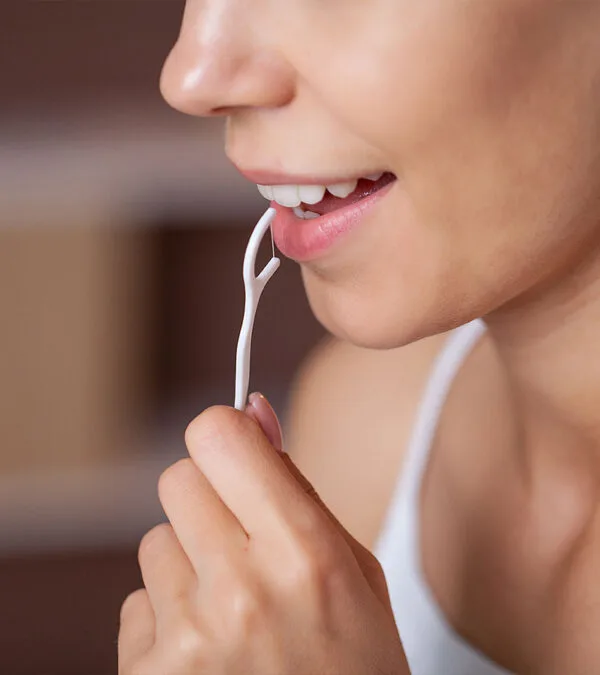
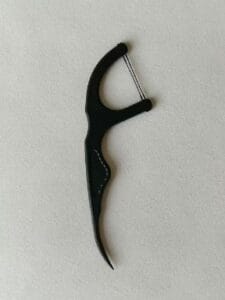
A floss pick holds a short section of floss on a handle. It is one of the most convenient dental teeth cleaning tools for users who find traditional floss difficult to wrap around their fingers.
Richsource dental floss picks are available in adult, children’s, orthodontic, biodegradable, bamboo, bamboo charcoal, and plastic-free formats. Their portable design can support home routines, travel kits, dental clinics, retailers, and private-label oral care programs.
Advantages of Floss Picks
Floss picks are compact and require less finger coordination than string floss. They can also make it easier to reach the back teeth.
Limitations of Floss Picks
A fixed floss segment may provide less flexibility than traditional floss. Users should avoid snapping the floss into the gum and should move it gently along both sides of each tooth.
4. Interdental Brushes
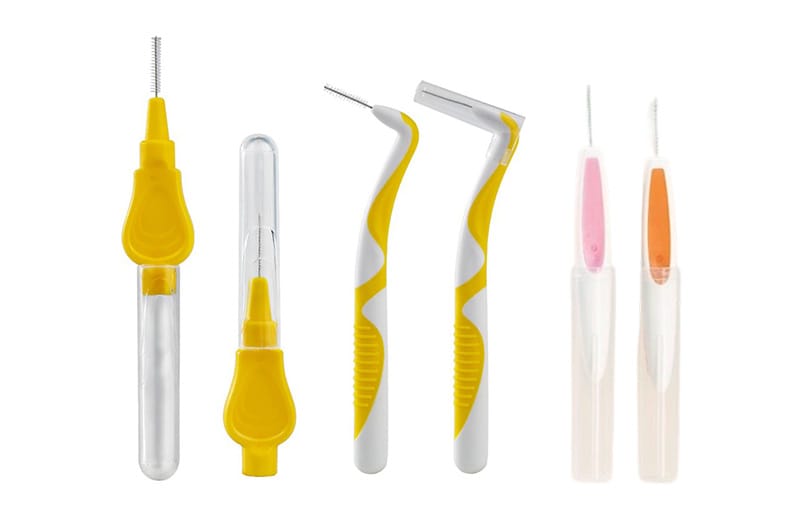
An interdental brush is a small brush designed to pass through spaces between teeth. These dental teeth cleaning tools may be useful for wider gaps, orthodontic appliances, bridges, and certain implant-care routines.
Richsource supplies interdental brushes in straight, angled, flexible, clinic, and braces-oriented designs. Different handle angles and brush sizes help brands serve users with different access and spacing requirements.
Straight Interdental Brushes
Straight brushes work well for accessible front teeth and uncomplicated spaces. Their simple design allows users to see and control the insertion direction.
Angled Interdental Brushes
Angled models can make it easier to reach spaces around the back teeth. The handle angle may reduce excessive wrist movement.
Flexible Interdental Brushes
Flexible designs can adapt to curved access paths. They should still be guided carefully rather than bent or forced into a gap.
For a more technical explanation, read What Are Interdental Brushes?.
5. Tongue Scrapers
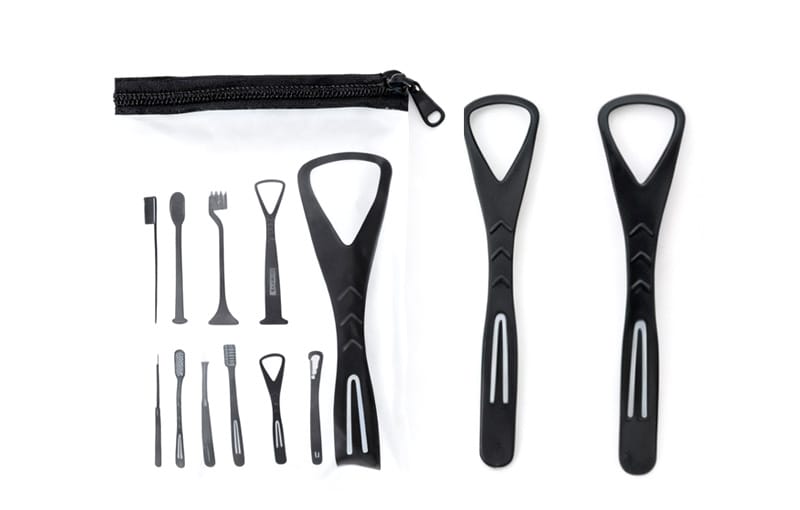
A tongue scraper is used to remove coating and debris from the surface of the tongue. It does not clean between teeth, but it can complement other dental teeth cleaning tools in a complete oral hygiene routine.
Richsource offers tongue scraper products with biodegradable, eco-friendly, portable, and customizable designs.
Gentle Pressure Matters
A tongue scraper should move smoothly from the back area toward the front without causing pain. Pressing harder does not necessarily improve cleaning and may irritate the tongue.
Cleaning and Storage
Rinse the scraper after use and allow reusable products to dry. Replace the product if the surface becomes rough, cracked, deformed, or difficult to clean.
6. Water Flossers
A water flosser uses a directed stream of water to clean around teeth and dental appliances. It may be useful for people who have difficulty manipulating floss or cleaning around orthodontic hardware.
A water flosser should be used at a comfortable pressure setting. It is a supplementary home-care device and should not be treated as a tool for diagnosing or removing hardened deposits.
Comparison of Home Dental Teeth Cleaning Tools
| Tool | Primary Cleaning Area | Best Suited For | Main Advantage | Safety Consideration |
|---|---|---|---|---|
| Soft toothbrush | Exposed tooth surfaces and gumline | Most users | Foundation of daily cleaning | Avoid aggressive scrubbing |
| Dental floss | Tight spaces between teeth | Closely spaced teeth | Wraps around tooth surfaces | Do not snap into the gums |
| Dental tape | Tight or moderate spaces | Sensitive users and beginners | Wider, comfortable surface | Use gentle C-shaped movement |
| Floss pick | Spaces between teeth | Travel and limited dexterity | Easy one-hand control | Clean both sides of each gap |
| Interdental brush | Wider interdental spaces | Braces, bridges, wider gaps | Efficient access to open spaces | Never force an oversized brush |
| Tongue scraper | Tongue surface | Users concerned about tongue coating | Simple complementary cleaning | Avoid excessive pressure |
| Water flosser | Gumline and dental appliances | Braces or limited dexterity | Comfortable water-based cleaning | Begin with a low setting |
| Metal dental scaler | Hardened deposits | Professional procedures | Precise professional access | Not recommended for untrained home use |
Dental Floss vs Interdental Brushes
Dental floss and interdental brushes are not interchangeable in every situation. Choosing between these dental teeth cleaning tools usually depends on tooth spacing, dental appliances, and the user’s ability to control the product.
Dental Floss for Tight Contacts
Floss is thin enough to enter narrow spaces where a brush cannot fit. It should be guided gently through the contact, curved around one tooth, and moved vertically before cleaning the adjacent tooth.
Interdental Brushes for Wider Gaps
Interdental brushes can provide broad bristle contact in more open spaces. They are often easier to maneuver around brackets, bridges, or areas where gum recession has created a larger gap.
Can You Use Both?
Yes. Some people use floss for tight front contacts and interdental brushes for wider spaces elsewhere. A dentist or hygienist can help determine which tool is appropriate for each area.
Safe Tools vs Risky Home Instruments
The phrase “dental cleaning kit” can refer to very different products. Some kits contain gentle daily-use tools, while others include sharp metal instruments that resemble professional equipment.
Safe Daily-Use Products
Common safe dental teeth cleaning tools include:
- Soft-bristled toothbrushes
- Dental floss and dental tape
- Floss picks
- Correctly sized interdental brushes
- Smooth tongue scrapers
- Water flossers used according to instructions
These products are intended to remove soft plaque, food residue, and surface debris.
Tools That Require Greater Caution
Metal scalers, curettes, sharp probes, and scraping hooks are designed for controlled professional procedures. Using them without training may cause cuts, gum injury, scratched restorations, or incomplete removal of deposits.
Hardened Tartar Is Not Home Plaque
Soft plaque can be disrupted with daily cleaning. Once deposits harden, attempting to scrape them away at home is not a substitute for professional cleaning.
Sharp Tools Can Slip
The mouth contains delicate soft tissue and curved surfaces. A small hand movement can cause a pointed instrument to slip into the gums, cheek, or tongue.
How to Choose Dental Teeth Cleaning Tools

The best purchasing decision begins with the user’s actual oral condition rather than the number of tools included in a kit.
Consider Tooth Spacing
Tight contacts usually favor thin floss, smooth waxed floss, or dental tape. Wider spaces may be more suitable for an interdental brush selected in the correct size.
Consider Hand Dexterity
Traditional floss requires coordinated finger movements. Users with limited dexterity may prefer floss picks, long-handled interdental brushes, or carefully controlled water flossers.
Consider Braces and Dental Work
Brackets, wires, bridges, implants, and retainers create additional surfaces where plaque can collect. Orthodontic floss picks, angled interdental brushes, or other appliance-friendly products may improve access.
Users should follow advice from their dentist because implants and restorations may require specific techniques.
Consider Gum Sensitivity
Sensitive or inflamed gums require gentle cleaning rather than complete avoidance. A soft toothbrush, smooth floss, and correctly sized brush may reduce unnecessary irritation.
Persistent bleeding, swelling, pain, or recession should be evaluated by a dental professional.
Consider Product Materials
Materials should be smooth, stable, clean, and suitable for oral contact. Buyers should also examine whether the floss frays, whether brush wires are securely covered, and whether handles remain stable during use.
Consider Clear Instructions
Home dental teeth cleaning tools should include understandable instructions, warnings, age guidance, cleaning information, and replacement recommendations.
Clear packaging is particularly important for children’s products, orthodontic tools, and private-label kits sold to first-time users.
A Safe Daily Home Cleaning Routine
A consistent routine is more valuable than occasional aggressive cleaning. Dental teeth cleaning tools work best when each product has a clear purpose.
Step 1: Clean Between the Teeth
Use floss, a floss pick, or an appropriately sized interdental brush once a day. Move slowly and clean each accessible interdental area without forcing the tool.
Using String Floss Safely
Guide the floss through the contact with a gentle side-to-side movement. Curve it around the tooth in a C shape and move it up and down against the tooth surface.
Use a clean section of floss as you progress through the mouth.
Using an Interdental Brush Safely
Insert the brush horizontally into the space without pressure. Move it gently through the gap and remove it without twisting aggressively.
If the brush does not enter comfortably, choose a smaller size rather than pushing harder.
Step 2: Brush With Fluoride Toothpaste
Brush the outer, inner, and chewing surfaces of the teeth for about two minutes. Use controlled movements and avoid applying so much pressure that the bristles bend sharply.
Step 3: Clean the Tongue Gently
Place the tongue scraper as far back as is comfortable. Pull it forward gently, rinse it, and repeat only as needed.
Step 4: Rinse and Store Reusable Tools
Rinse reusable dental teeth cleaning tools and allow them to dry in a clean location. Do not share personal oral care products with other household members.
Common Mistakes to Avoid
Using Excessive Force
Pressure is not the same as effectiveness. Aggressive flossing, brushing, or scraping can irritate tissue and make users less likely to maintain a daily routine.
Forcing an Interdental Brush
An oversized brush may bend, catch, or press against the gum. The correct size should enter with light resistance but without pain.
Snapping Floss Into the Gum
Floss should pass through the tooth contact with a gentle controlled movement. Snapping it downward may cut or bruise the gum tissue.
Reusing Disposable Products Too Long
A disposable floss pick may collect debris and lose tension. Follow the manufacturer’s directions and replace products that become dirty, damaged, or ineffective.
Using One Tool for Every Area
Different spaces may need different dental teeth cleaning tools. A single brush size or floss format may not fit every part of the mouth equally well.
Trying to Remove Tartar at Home
Daily tools are designed mainly for soft plaque and debris. Hardened deposits should be assessed and removed by a trained dental professional.
Choosing Home Oral Care Products for Different Users
Children
Children need age-appropriate dental teeth cleaning tools with smooth edges, comfortable handles, and adult supervision. Small floss picks may improve control, but the child’s ability and the product instructions should always be considered.
Sharp picks and professional-style instruments should be kept away from children.
Older Adults
Older adults may benefit from large, non-slip handles and tools that require less finger coordination. Floss picks, angled interdental brushes, and water flossers may improve access.
Existing bridges, implants, crowns, dry mouth, or gum recession may change the appropriate routine, so professional guidance is valuable.
People With Braces
Braces create additional surfaces around brackets and wires. Orthodontic floss picks and interdental brushes can help reach these areas without attempting to scrape the appliance.
Richsource offers orthodontic floss pick and braces-oriented interdental brush options for brands developing targeted home-care ranges.
Travelers
Portable floss picks, capped interdental brushes, compact floss rolls, and travel tongue scrapers can support oral hygiene away from home. Packaging should protect the working surface from contamination.
Eco-Conscious Users
Biodegradable handles, reduced-plastic packaging, and alternative floss materials are increasingly relevant purchasing considerations. Environmental design should not compromise smoothness, strength, hygiene, or user control.
What Buyers Should Look for in Home Dental Products
Distributors, clinics, retailers, hotels, subscription brands, and oral care companies should evaluate more than appearance when sourcing dental teeth cleaning tools.
Product Performance
Floss should maintain suitable tension and resist unnecessary shredding. Interdental brushes should retain their bristles, while handles should remain stable under normal use.
Target-User Fit
A product range may include separate designs for adults, children, orthodontic users, travelers, eco-conscious consumers, and people with reduced dexterity.
Packaging Hygiene
Packaging should protect the product before use and provide clear handling instructions. Travel products may require individual wrapping or protective caps.
Customization Potential
Richsource provides oral care products and OEM/ODM solutions for dental floss rolls, floss picks, interdental brushes, tongue scrapers, and other home-care formats.
Brands may consider customizing:
- Product material
- Floss type and thickness
- Handle shape and color
- Brush angle and size
- Flavor or fragrance
- Individual or multi-pack packaging
- Logo and private-label design
- Eco-friendly product positioning
For broader product planning, buyers can also read Best Dental Hygiene Tools 2026 and Dental Experts Pick Interdental Cleaning Tools.
When Should You Stop and Contact a Dentist?
Home dental teeth cleaning tools are intended for routine hygiene, not for treating unexplained dental symptoms.
Stop using a tool and seek professional advice when you experience:
- Persistent or heavy gum bleeding
- Increasing swelling or pain
- A loose crown, bridge, filling, or implant component
- Floss that repeatedly catches or tears in the same place
- A brush that cannot enter a space without force
- A mouth ulcer or injury that does not improve
- Ongoing bad breath despite consistent cleaning
- Suspected hardened tartar that cannot be removed through normal brushing
Temporary mild bleeding can occur when someone begins interdental cleaning, especially if the gums are already inflamed. However, bleeding that continues or becomes worse should not be ignored.
FAQ About Dental Teeth Cleaning Tools
What are the safest dental teeth cleaning tools to use at home?
For most users, safe options include a soft-bristled toothbrush, dental floss, floss picks, correctly sized interdental brushes, a smooth tongue scraper, and a water flosser used according to its instructions.
Sharp metal scalers and professional scraping tools are not appropriate for unsupervised home cleaning.
What dental cleaning tool removes plaque between teeth best?
The best tool depends on the size of the space. Floss is commonly used for tight contacts, while an interdental brush may provide better access in wider spaces.
Some users need both tools in different areas of the mouth.
Are home dental cleaning kits safe?
A kit containing floss, floss picks, interdental brushes, and a tongue scraper can support daily care. A kit containing sharp probes, metal scalers, or scraping hooks requires much greater caution and should not be treated as a substitute for professional cleaning.
Can I scrape tartar off my teeth at home?
You should not attempt to remove hardened tartar with sharp instruments. Home dental teeth cleaning tools are designed mainly to manage soft plaque and food debris.
A dentist or dental hygienist can safely assess and remove hardened deposits.
Is dental floss or an interdental brush better?
Neither option is universally better. Dental floss is usually more suitable for narrow contacts, while interdental brushes often work better in wider spaces or around braces and bridges.
The correct choice depends on the individual space being cleaned.
Why does my interdental brush hurt?
The brush may be too large, inserted at the wrong angle, or pushed with excessive force. Stop forcing it and try a smaller size only if appropriate.
Pain, persistent bleeding, or swelling should be discussed with a dentist.
Should I floss before or after brushing?
Many people clean between their teeth before brushing so loosened debris can be removed during brushing. The most important factor is completing both steps consistently and using a gentle technique.
Can I use dental teeth cleaning tools every day?
Most products designed for routine oral hygiene can be used daily when used correctly. Always follow the manufacturer’s instructions and any personalized advice from your dentist.
How often should I replace an interdental brush?
Replace it when the bristles become worn, the wire bends, the handle breaks, or the product can no longer be cleaned properly. Replacement frequency depends on the design and the manufacturer’s instructions.
Are floss picks safe for children?
Children’s floss picks can be suitable when they are age-appropriate and used with adult supervision. Choose products with smooth edges and handles designed for smaller mouths.
What tools are best for braces at home?
Orthodontic floss picks, floss threaders, and appropriately sized interdental brushes are commonly used around braces. A dental professional can demonstrate how to clean around brackets and wires without damaging the gums or appliance.
Can a tongue scraper replace brushing or flossing?
No. A tongue scraper cleans the tongue surface, while brushing and interdental cleaning target different areas.
It should be considered a complementary tool rather than a replacement.
Conclusion
Safe home dental care is based on control, consistency, and correct product selection. The best dental teeth cleaning tools are not the sharpest or most complicated products. They are tools that fit the user’s mouth, reach the intended surface, and can be used gently every day.
A practical home kit may combine a soft toothbrush, dental floss or floss picks, correctly sized interdental brushes, and a smooth tongue scraper. Users with braces, implants, bridges, persistent bleeding, or dental pain should seek personalized professional advice.
Richsource develops and manufactures dental floss rolls, floss picks, interdental brushes, tongue scrapers, and other oral care products for global brands, distributors, clinics, and retailers. Explore the complete oral care product range or contact Richsource to discuss bulk supply, eco-friendly materials, private-label packaging, and OEM/ODM customization.
Recommended External Resources
- American Dental Association: Dental Floss and Interdental Cleaners
- American Dental Association: Home Oral Care
- NHS: How to Keep Your Teeth Clean
- Wikipedia: Interdental Cleaning
Medical note: This article provides general oral-care information and does not replace diagnosis, treatment, or personalized advice from a qualified dentist or dental hygienist.
Stay Connected! 🌟
Thanks for reading! If you enjoyed this article, don’t forget you can follow me on social media for more insights, updates, and behind-the-scenes content:
Facebook – Join the conversation and get the latest updates
YouTube – Watch tutorials, demos, and in-depth guides
Instagram – See tips, visuals, and daily inspiration
Let’s continue learning and growing together—stay connected and never miss a beat!