Table of Contents
Introduction
Dental floss may look like one of the simplest products in an oral care range, but small differences in fiber structure, texture, thickness, coating and surface finish can significantly change how consumers perceive and use it.
For brands, importers, distributors and private-label oral care companies, this makes textured dental floss more than a basic hygiene product. Its structure can influence grip against the tooth surface, perceived softness, resistance to fraying, ease of insertion between teeth and the overall user experience.
The American Dental Association explains that dental floss is commonly manufactured from nylon filaments or plastic monofilaments and is designed to remove food debris and plaque from areas that toothbrush bristles cannot effectively reach.
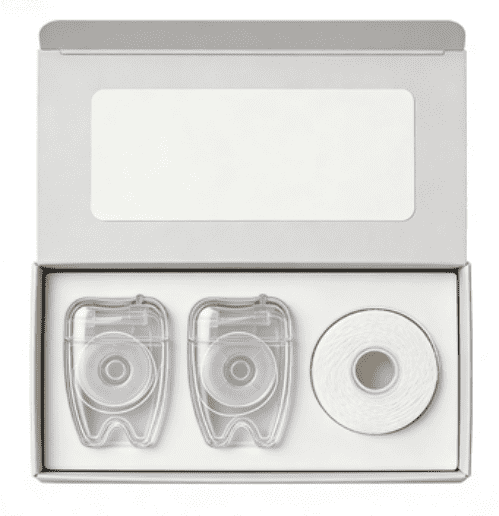
Richsource manufactures customizable dental floss products for global oral care brands, covering biodegradable, eco-friendly, waxed and OEM/ODM dental floss solutions.
For buyers developing a new dental floss line, the key question is therefore not simply “Which floss is cheapest?” A better question is: which material and surface structure best match the consumer, market positioning, packaging format and target price of the product?
This guide explains how textured dental floss works, how it differs from smooth and woven alternatives, which material factors influence performance, and what B2B buyers should evaluate before starting mass production.
What Is Textured Dental Floss?
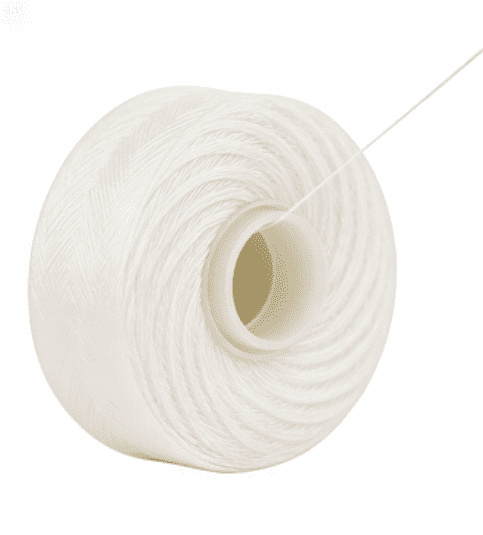
Textured dental floss is designed with a surface or fiber structure that provides more noticeable contact between the floss and the tooth surface than an extremely smooth monofilament strand.
The term can cover several different product constructions.
Some textured floss is made from multiple fine filaments twisted or bundled together. Other products use woven or expanded structures that create a softer and more substantial strand. Manufacturers may also modify the floss through coatings, fiber combinations or processing techniques that change its surface feel.
This means “textured” should not be treated as one standardized material category.
For a buyer, the exact construction matters.
Two products can both be marketed as textured dental floss while having very different:
- fiber counts;
- thicknesses;
- tensile strength;
- surface friction;
- softness;
- coatings;
- expansion characteristics;
- resistance to shredding.
The product specification therefore needs to define the physical structure rather than relying only on a marketing description.
Why Texture Matters in Dental Floss Design
Dental floss needs to perform in a narrow and variable space.
Some consumers have extremely tight contacts between adjacent teeth. Others have larger interdental spaces. Some want a very smooth floss that slides easily, while others prefer a strand that feels more substantial against the tooth.
Texture can help a brand create a specific sensory and functional experience.
A more noticeable surface can give consumers the perception that the strand is making greater contact with the tooth. A softer woven or multi-filament construction may also feel different around the gum line compared with a thin, smooth monofilament.
However, increasing texture without considering thickness or fiber stability can create new problems.
A strand that is too thick may be difficult to insert between tightly spaced teeth. A poorly engineered multi-filament structure may separate or fray. Excess surface friction may also make the floss less comfortable for some users.
The ideal product therefore depends on balancing texture with strength, thickness and glide.
Textured Dental Floss vs Smooth Dental Floss
The difference between textured and smooth floss is easiest to understand through the consumer experience.
| Feature | Textured Dental Floss | Smooth Dental Floss |
|---|---|---|
| Surface feel | More noticeable | Smoother |
| Tooth contact sensation | More pronounced | Lighter |
| Typical construction | Multi-filament, woven or structured | Often smooth filament or highly coated |
| Suitability for very tight contacts | Depends on thickness | Often easier when thin |
| Softness potential | High with suitable fiber design | Depends on material |
| Fraying risk | Depends strongly on construction | Can be lower with monofilament |
| Product differentiation | High | Moderate |
| Premium positioning | Strong potential | Strong for glide-focused products |
| Customization potential | Fiber, texture, coating, flavor | Material, coating, flavor |
Neither structure is automatically superior.
A brand positioned around “easy glide” may intentionally choose a smoother floss. A brand targeting consumers who want a more substantial cleaning sensation may find textured dental floss more appropriate.
The product should therefore be selected according to a clearly defined use case instead of assuming one construction works for every consumer.
Common Materials Used in Dental Floss
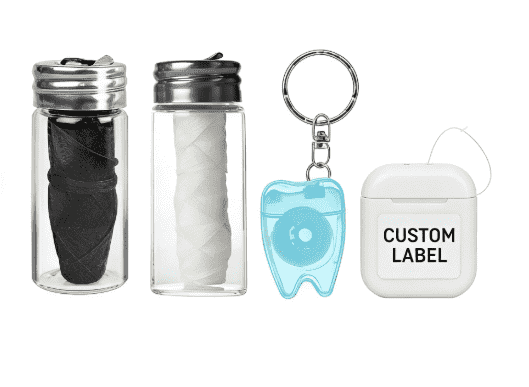
Understanding material is essential when sourcing textured dental floss because the material determines how the strand behaves before surface treatments and coatings are added.
Nylon
Nylon remains one of the most widely recognized dental floss materials.
It can be manufactured using multiple fine filaments, allowing manufacturers to adjust thickness, texture and flexibility. A multi-filament nylon structure can provide a soft feel and noticeable surface contact.
The ADA notes that modern dental floss is commonly made from nylon filaments or plastic monofilaments.
For B2B product development, nylon offers several advantages because manufacturers can adjust characteristics such as filament count, twist, strand thickness, coating and color.
However, buyers should also evaluate fraying and shredding resistance carefully, particularly when the product is intended for users with very tight or irregular tooth contacts.
Polyester and Other Synthetic Fibers
Polyester-based or other synthetic fiber structures can also be developed for selected floss products.
Their suitability depends on how the fiber is processed, bundled and coated.
For a sourcing project, buyers should not evaluate fiber name alone. Tensile strength, diameter, abrasion resistance and finished surface feel are more useful indicators of how the product will perform.
Monofilament Materials
A monofilament floss uses a more continuous single-strand construction rather than a bundle of many fine fibers.
This type of floss is commonly associated with smooth glide and resistance to filament separation.
However, the smooth surface may provide a different sensory experience than a textured multi-filament product.
A monofilament design can be appropriate for a brand focused on tight contacts and glide, while textured multi-filament products may better support messages around softness, surface contact or a fuller strand.
Alternative and Sustainability-Focused Materials
Brands increasingly ask manufacturers about biodegradable, bio-based or reduced-plastic floss options.
Richsource currently lists biodegradable and eco-friendly dental floss among its customizable product range and highlights material innovation as part of its OEM/ODM capability.
For these projects, buyers should consider both environmental positioning and actual product performance.
An alternative material still needs sufficient tensile strength, storage stability, suitable coating compatibility and reliable performance during use.
Sustainability should therefore be incorporated into the engineering specification rather than added only as a marketing claim.
Textured vs Woven Dental Floss
Textured and woven floss overlap, but the terms are not necessarily identical.
Woven floss generally refers to a structure created by combining or interlacing fibers in a way that creates a broader, softer or more fabric-like strand.
Textured floss is a broader concept. Texture may come from weaving, twisting, bundling, expansion, coating or other structural design.
A buyer can therefore think about the relationship this way:
Woven floss is usually textured, but textured floss does not always have to be woven.
Richsource already discusses developments in woven dental floss in its existing industry content, so future product development should distinguish clearly between the physical structure of the strand and broader marketing terminology rather than creating overlapping product descriptions.
For OEM buyers, the useful questions are:
How is the strand constructed?
How many fibers are used?
Does it expand or flatten during use?
What is its finished diameter?
How does it behave under tension?
How resistant is it to fraying?
How does the coating affect the original texture?
These answers tell a buyer far more than simply seeing the words “woven” or “textured” on a specification sheet.
Waxed vs Unwaxed Textured Dental Floss
Coating is another major factor in floss performance.
Waxed Textured Floss
Wax or another suitable coating can influence glide, flavor delivery, surface feel and fiber stability.
For a multi-filament floss, coating may help hold fibers together and make insertion between teeth feel smoother.
Waxed textured floss can therefore offer a useful compromise: consumers still experience a more substantial strand while the coating reduces excessive friction.
Unwaxed Textured Floss
Unwaxed floss allows the natural fiber structure to remain more noticeable.
Depending on the construction, this may provide a stronger tactile sensation against the tooth.
However, the user experience depends heavily on fiber quality and strand design. Without an appropriate coating, some multi-filament structures may have a greater tendency to separate or snag.
Importantly, the ADA states that there is no established effectiveness difference simply between waxed and unwaxed floss; product choice is generally more about suitability and correct use.
For brands, this means waxed versus unwaxed should usually be treated as a product-experience decision rather than a simplistic “better versus worse” claim.
How Thickness Changes the User Experience
Thickness is one of the most important specifications in a textured floss project.
Texture and thickness often interact.
A heavily textured strand that is also relatively thick may feel comfortable for consumers with normal or wider interdental spaces but difficult to insert into very tight contacts.
Conversely, a thinner textured floss may retain some of the tactile advantages of a structured surface while remaining easier to use between closely spaced teeth.
Brands should therefore develop thickness around the intended consumer group.
Very Tight Tooth Contacts
Prioritize controlled thickness, smooth insertion and fiber stability.
A heavy texture may not be appropriate unless the strand can compress during insertion.
Normal Interdental Spaces
Buyers have more freedom to use moderate texture and thickness to create a noticeable cleaning experience.
Wider Interdental Spaces
A fuller or expanding structure may provide consumers with a stronger sense of tooth-surface contact.
However, dental floss is not always the ideal solution for every type of interdental space. The ADA notes that floss can be suitable for tight interdental spaces, whereas interdental brushes may be useful in more open spaces and in certain periodontal situations.
Brands developing a complete cleaning range can therefore combine dental floss with Richsource’s customizable interdental brush products rather than trying to make one product solve every use case.
Tensile Strength and Fraying Resistance
For B2B sourcing, softness and texture are easy to assess in a sample. Long-term consistency is harder.
One critical specification is tensile strength.
Dental floss is repeatedly placed under tension during use. If the strand breaks too easily, consumers quickly perceive the product as low quality.
At the same time, tensile strength alone does not tell the full story.
A floss can have acceptable breaking strength but still suffer from excessive filament separation or shredding when dragged against rough tooth surfaces, restorations or tight contacts.
Sample testing should therefore consider:
- breaking strength;
- elongation;
- filament separation;
- resistance to fraying;
- strand consistency;
- behavior after coating;
- performance around tight contacts.
This is especially important with textured products because their more complex fiber structures create additional variables compared with a simple smooth monofilament.
Flavor and Coating Options
Dental floss has gradually become a more differentiated consumer product, and flavor can influence how a brand positions its range.
The ADA notes that dental floss may be treated with flavoring agents such as mint to make use more pleasant.
Typical private-label development may therefore consider:
- mint;
- fresh mint;
- fruit-inspired profiles;
- neutral or unflavored versions;
- waxed or lightly coated structures.
The important sourcing point is that flavor cannot be considered independently from the fiber.
Coating level can affect texture.
A heavy coating may make a textured strand feel smoother and reduce the physical distinction that the product is designed to create. A lighter coating may preserve more texture but provide a different glide profile.
During sample development, buyers should therefore compare multiple coating levels whenever texture is one of the main selling points.
Choosing Textured Floss for Different Consumers
A successful product should be designed around a defined user rather than a generic idea of “better floss.”
Sensitive-Gum Positioning
A softer multi-filament or woven construction may support a gentle-use positioning, provided the final floss has controlled fiber integrity and suitable thickness.
Marketing claims about specific clinical benefits should still be supported appropriately.
Premium Daily Oral Care
Texture, premium dispenser design, mint flavor and customized packaging can be combined to create stronger shelf differentiation.
In this segment, sensory experience can be just as important as the raw material itself.
Family Oral Care
Brands targeting broad household use may prioritize moderate thickness, reliable strength and a familiar flavor rather than an extreme texture.
Eco-Conscious Product Lines
Textured floss can also be paired with alternative materials and reduced-packaging concepts.
Richsource supports biodegradable and eco-friendly dental floss formats as part of its customizable dental floss product range.
Professional and Private-Label Programs
Wholesalers, distributors, dental brands and retail chains may require multiple specifications under one brand.
For example, a product line could include:
a smooth easy-glide floss for tight contacts, a textured daily floss, a thicker woven floss and an environmentally positioned alternative.
This segmented approach can help a brand address different consumer needs without forcing one SKU to serve the entire market.
Regulatory and Quality Considerations for Buyers

Dental floss should not be treated as an ordinary piece of string.
For the U.S. market, FDA currently classifies dental floss under regulation 21 CFR 872.6390 as a Class I dental device, product code JES.
This distinction matters when manufacturers and private-label brands prepare compliance documentation and plan market entry.
For integrated dental floss-and-handle products, ISO 28158:2018 specifies requirements and test methods for integrated dental floss and handles used in oral health care.
Although a loose dental floss roll and an integrated floss pick are not identical product configurations, B2B buyers should adopt the same general discipline: clearly define materials, physical specifications, product performance, labeling requirements and applicable market regulations before production.
When requesting samples or documentation from a manufacturer, buyers should confirm which regulations and standards actually apply to the precise product being purchased instead of copying claims from a different oral care category.
What Should Be Included in a Dental Floss Specification?
One of the easiest ways to prevent sourcing problems is to create a detailed specification before negotiating final price.
A useful textured floss specification should include:
| Specification | Questions to Define |
| Fiber material | Nylon, alternative fiber or another material? |
| Construction | Monofilament, multifilament, twisted or woven? |
| Texture | Light, medium or pronounced? |
| Thickness | What finished diameter or width is required? |
| Tensile performance | What minimum performance is expected? |
| Wax/coating | Waxed, unwaxed or custom coating? |
| Flavor | Mint, other flavor or unflavored? |
| Color | Standard or custom? |
| Length | How many meters per dispenser? |
| Dispenser | Existing mold or custom design? |
| Branding | Printed logo, label or custom packaging? |
| Retail packaging | Box, blister, individual pack or another format? |
| Sustainability requirement | Conventional, bio-based or biodegradable option? |
| Target market | Which regulatory market will receive the product? |
| Order quantity | Trial order or mass-volume program? |
Without this information, two supplier quotations may look similar while referring to substantially different products.
How to Evaluate Dental Floss Samples
A professional sample evaluation should go beyond visual appearance.
First, check strand consistency.
Pull several sections from different points of the spool and compare thickness, surface texture and fiber structure. The product should remain reasonably consistent throughout the roll.
Next, evaluate glide and resistance.
Test the floss across different interdental contact conditions rather than judging it only between the fingers.
Then examine fraying.
After repeated movement, inspect whether individual fibers separate excessively.
The dispenser should also be evaluated. Cutting performance, spool rotation, lid stability and dispensing resistance contribute to the total user experience.
Finally, review the packaging.
Premium floss inside a weak dispenser or poorly printed package will still create a low-value impression.
For private-label projects, product, dispenser and packaging should be approved as one complete system.
Custom Textured Dental Floss for Private Labels
Customization is where textured floss becomes particularly valuable to B2B buyers.
Instead of simply purchasing a generic floss roll, brands can develop a more recognizable product through combinations of:
- customized fiber or floss structure;
- different floss thicknesses;
- waxed or unwaxed finishes;
- flavor options;
- floss color;
- dispenser color;
- logo application;
- customized carton artwork;
- retail pack quantities;
- eco-friendly material concepts.
Richsource states that its OEM/ODM service covers product design, material selection, mold development and packaging customization, supported by large-scale manufacturing capabilities.
This allows textured floss to be developed as part of a broader private-label oral care program rather than as an isolated commodity.
Questions to Ask a Textured Dental Floss Manufacturer
Before approving an OEM order, buyers should ask more than the unit price.
Useful questions include:
- What fiber material is used?
- Is the floss monofilament, multifilament, woven or twisted?
- How is the texture created?
- What thickness options are available?
- What tensile strength requirements are used during production?
- How is fraying resistance evaluated?
- Which coatings are available?
- Can coating level be adjusted?
- Which flavors are available?
- Can the floss color be customized?
- Can the dispenser color and shape be customized?
- Can a custom mold be developed?
- What packaging formats are available?
- What is the MOQ for an existing specification?
- How does the MOQ change for custom materials or packaging?
- Can samples be produced before mass production?
- What quality-control records can be supplied?
- What regulatory documentation is available for the destination market?
- Can the supplier support multiple floss variants within one product range?
- What production capacity is available for repeat bulk orders?
These questions help buyers distinguish a product trader from a manufacturer capable of supporting long-term product development.
Common Sourcing Mistakes to Avoid
Choosing Texture Without Defining Thickness
Texture cannot be evaluated independently from strand dimensions. A highly textured product can become difficult to use if it is also excessively thick.
Selecting the Cheapest Fiber
A small difference in material cost can have a large effect on breakage, fraying and consumer perception.
For a private-label brand, a slightly lower unit price may not justify a higher complaint or return rate.
Ignoring the Dispenser
Consumers interact with the dispenser every time they use the product.
Poor cutting, unstable lids or inconsistent spool movement can damage the experience even when the floss itself is good.
Making Unsupported Performance Claims
A brand should distinguish between product design characteristics and clinically validated outcomes.
Terms such as “soft,” “textured,” or “easy glide” describe product attributes more directly than unsupported claims about preventing or treating oral disease.
Approving Only One Sample
One ideal sample does not prove production consistency.
For larger programs, buyers should establish an approved reference sample and clear specification so production batches can be compared against a defined standard.
Frequently Asked Questions
What is textured dental floss?
Textured dental floss has a surface or fiber structure designed to create more noticeable contact and tactile feedback than extremely smooth floss. The texture may come from multiple fibers, twisting, weaving, expansion or other structural design.
Is textured dental floss the same as woven floss?
Not always. Woven dental floss is generally a type of structured or textured floss, but dental floss can also be textured through other fiber arrangements or surface treatments.
Is textured floss better than smooth floss?
Neither is universally better. Smooth floss may be preferred for very tight contacts and easy glide, while textured floss may provide a fuller feel and stronger surface-contact sensation. Product choice depends on consumer needs and the exact specification.
What material is commonly used for dental floss?
According to the American Dental Association, modern dental floss is commonly made from nylon filaments or plastic monofilaments. Other materials can also be developed depending on the product concept.
Is waxed dental floss more effective?
The ADA notes that there is no established difference in effectiveness simply between waxed and unwaxed floss. The most suitable option is generally the product consumers can use properly and consistently.
Can textured dental floss be flavored?
Yes. Flavor can be incorporated into the product through suitable formulations or coatings. Mint is a common option, although private-label specifications may vary.
Can textured floss be made for private-label brands?
Yes. Depending on manufacturing capabilities, buyers can customize floss material, texture, thickness, coating, flavor, color, dispenser, logo and retail packaging.
Can textured dental floss be biodegradable?
Alternative and biodegradable material concepts are possible, but buyers should verify the exact composition, performance characteristics and appropriate environmental claims. Richsource lists biodegradable and eco-friendly dental floss among its product options.
What should I test before ordering textured floss in bulk?
Key checks include thickness consistency, tensile strength, fraying resistance, glide, texture, coating stability, flavor, dispenser performance, packaging quality and batch consistency.
Is dental floss regulated in the United States?
Yes. FDA currently lists dental floss as a Class I device under regulation 21 CFR 872.6390, product code JES. Buyers selling into the U.S. should confirm the regulatory requirements that apply to their specific product and business role.
Conclusion
Textured dental floss gives oral care brands an opportunity to differentiate a product that might otherwise appear highly standardized.
But effective differentiation comes from engineering rather than marketing terminology alone.
Fiber material, strand construction, thickness, texture, tensile strength, fraying resistance, coating, flavor and dispenser design all interact to determine how the product performs in the consumer’s hands.
For B2B buyers, the best sourcing process begins by defining the intended user and product positioning. A floss designed for very tight contacts should not automatically use the same structure as one developed around softness and a fuller cleaning sensation. Likewise, a sustainability-focused product may require different material and packaging decisions from a conventional high-volume retail floss.
Richsource manufactures dental floss alongside dental floss picks, interdental brushes, tongue scrapers and other customizable oral care products, with OEM/ODM services covering material selection, product design, mold development and packaging customization.
For brands, wholesalers and distributors developing a textured dental floss or complete private-label oral care range, defining the material specification before mass production is one of the most important steps toward consistent quality, clearer positioning and long-term sourcing stability.