Table of Contents
Introduction

For most consumers, a dental floss pick is a simple everyday oral care product. For brands, distributors, hotels, pharmacies, dental clinics, travel-product companies, and private-label buyers, however, the packaging around that floss pick can completely change where and how the product can be used.
This is why individually wrapped dental floss picks occupy a distinct position within the interdental care market. By placing each floss pick in its own sealed wrapper, brands can improve portability, protect the product during handling, create additional branding space, and develop formats suited to hospitality, travel, sampling, retail, and professional distribution.
The packaging decision also introduces new sourcing questions. Buyers need to evaluate wrapper materials, sealing quality, opening experience, print accuracy, pack count, secondary packaging, product dimensions, floss tension, and production consistency at the same time.
The American Dental Association identifies floss and other interdental cleaners as useful tools for removing debris and plaque from areas between teeth that toothbrush bristles may not effectively reach. American Dental Association guidance on floss and interdental cleaners
For B2B buyers, this means individually wrapped floss picks should be evaluated as functional oral care products first and packaging items second.
Richsource offers customizable dental floss picks with options covering different materials, shapes, floss specifications, colors, packaging concepts, and private-label requirements. This guide explains how to build a commercially practical individually wrapped floss pick program from product specification through packaging and mass production.
What Are Individually Wrapped Dental Floss Picks?
Individually wrapped dental floss picks are integrated floss-and-handle products packaged separately rather than placed loose inside a pouch, box, or dispenser.
Each unit normally consists of two elements: the floss pick itself and an outer wrapper.
That apparently simple change creates several commercial advantages.
The wrapper protects the floss pick from direct handling before use, makes individual distribution easier, and provides an additional surface for branding or product information. It also allows a larger bulk carton to be divided across restaurants, hotel rooms, travel kits, dental clinics, promotional sets, or other environments without consumers directly handling the remaining products.
However, “individually wrapped” does not describe one fixed specification.
Different projects may require:
paper-style wrappers, film wrappers, printed wrappers, unprinted wrappers, single-color branding, full artwork, tear-open structures, different sealing methods, and different secondary packaging quantities.
The correct format depends on where the product will ultimately be used.
Why Individual Packaging Changes the Product
A loose floss pick and an individually wrapped floss pick may use exactly the same handle and floss, but their commercial roles can be very different.
Loose floss picks are particularly convenient for household packages where consumers repeatedly access the same pouch or container.
Individual wrapping is more useful when units need to be distributed separately.
A hotel can place one or two floss picks inside an amenity kit. A restaurant can provide them after meals. A dental clinic can distribute samples. A travel brand can include them in personal hygiene kits. An oral care brand can create convenient on-the-go packs.
This means packaging should be defined alongside the intended sales channel.
A buyer who first develops the floss pick and only considers wrapping after the product specification is finalized may discover that the handle is too long for the preferred wrapper, the retail carton becomes unnecessarily large, or the chosen packaging process increases production complexity.
The stronger approach is to engineer the floss pick, wrapper, and secondary package together.
Where Individually Wrapped Floss Picks Are Most Useful

The value of individual packaging varies according to the application.
Hotels and Hospitality
Hospitality is one of the most natural applications for individually wrapped floss picks.
Hotels, resorts, guesthouses, airlines, lounges, and travel-service businesses often need compact personal-care items that can be distributed one unit at a time.
Individual packaging supports this model because the consumer receives an unopened unit rather than taking a floss pick from a communal container.
The wrapper can also become part of the hospitality brand experience. A logo, hotel name, simple pattern, or short message can transform a small disposable oral care item into a subtle branded touchpoint.
Restaurants and Food Service
After-meal oral care creates another logical use case.
Restaurants, banqueting businesses, catering companies, and food-service distributors may prefer individually packaged products because they are easier to present at tables, checkout areas, reception desks, or takeaway counters.
For this application, simplicity usually matters.
The packaging needs to be compact, easy to open, and efficient to distribute. Overly complex retail packaging may add little value.
Travel and Personal Care Kits
Travel hygiene kits often combine toothbrushes, toothpaste, combs, cotton products, razors, or other compact necessities.
Individually wrapped dental floss picks fit naturally into these kits because they require very little space and can remain separated from surrounding items.
This format can also suit airlines, rail services, corporate travel packs, emergency hygiene kits, and subscription products.
Dental Clinics
Dental clinics may use individually packaged interdental products for patient education, sampling, or home-care support.
In this environment, product quality becomes particularly important. A poorly tensioned floss pick or rough handle can create an unfavorable impression even if the packaging looks professional.
Retail Oral Care Brands
Retailers and oral care brands can also use individual wrapping as a convenience feature.
For example, a retail carton might contain multiple individually wrapped picks designed for handbags, offices, travel, or daily use outside the home.
This creates a different consumer proposition from a conventional resealable pouch of loose floss picks.
Hygiene Protection vs Sterility
One important distinction should be made when writing product specifications or marketing copy.
Individual wrapping can protect a floss pick from ordinary environmental exposure and direct handling before use, but buyers should not automatically describe the product as “sterile.”
Sterility is a specific condition requiring defined processing, validation, packaging, and controls.
An ordinary individually wrapped floss pick should therefore not be marketed using medical or sterility claims unless the product and manufacturing process actually support them.
For most consumer and hospitality applications, a more accurate description is simply “individually wrapped” or “individually packaged.”
This language tells the buyer exactly what the packaging does without implying unsupported characteristics.
The Floss Pick Still Matters More Than the Wrapper
Attractive packaging cannot compensate for poor product performance.
The floss pick itself should remain the first technical priority.
Buyers should evaluate handle rigidity, floss tension, floss attachment, surface finish, dimensions, point design, and overall consistency before approving the packaging.
A consumer may appreciate the convenience of opening a clean individual wrapper, but that benefit disappears quickly if the floss breaks during use or the handle bends excessively.
Richsource’s dental floss pick product range includes different material and design concepts that can be adapted for adult, children’s, orthodontic, biodegradable, and other product positioning.
When developing an individually wrapped version, brands should choose the physical floss pick according to the intended consumer first, then build the wrapper around that specification.
Product Specifications Buyers Should Define
A professional RFQ for individually wrapped dental floss picks should cover both product and packaging.
| Specification Area | What Should Be Defined |
|---|---|
| Handle material | Conventional, alternative, bamboo-based or biodegradable concept |
| Handle dimensions | Length, width, thickness and shape |
| Handle color | Standard or custom |
| Floss material | Required floss construction |
| Floss thickness | Target consumer and interdental use |
| Floss tension | Performance requirement |
| Flavor | Mint, unflavored or another available option |
| Pick end | Shape and intended function |
| Wrapper material | Paper, film or another structure |
| Wrapper size | Matched to finished floss pick |
| Printing | Plain, logo, single-color or custom artwork |
| Seal | Required closure and consistency |
| Pack quantity | Units per inner pack or retail carton |
| Carton quantity | Units per export carton |
| Branding | Private-label information and artwork |
| Target market | Hospitality, retail, clinic, travel, etc. |
| Quality control | Product and packaging acceptance criteria |
Creating this specification before comparing suppliers prevents many misleading quotation differences.
A supplier offering a standard loose floss pick in a generic transparent wrapper is not providing the same product as a supplier quoting customized floss, branded packaging, tighter dimensional tolerances, and retail-ready secondary cartons.
Wrapper Material Selection
The wrapper is a relatively small part of the finished product, but it affects appearance, durability, opening experience, and sustainability positioning.
Paper-Based Wrappers
Paper-style wrappers can create a clean, familiar, and natural appearance.
They may work particularly well for hospitality, minimalist brands, or products positioned around reduced plastic use.
However, buyers should consider tear resistance, moisture exposure, print performance, and sealing compatibility.
Not every paper structure behaves the same way during automated packaging.
Film Wrappers
Film-based packaging can provide strong protection, good print clarity, and reliable machine processing.
It may be particularly appropriate when durability and moisture resistance are priorities.
The trade-off is that brands focused on sustainability may want to evaluate whether the wrapper material supports the environmental positioning of the wider product.
Composite Structures
Some packaging requires multiple materials or coated structures to achieve the desired sealing and protective characteristics.
These may perform well technically but can complicate environmental claims.
For brands developing sustainability-focused floss picks, wrapper composition should therefore be evaluated alongside handle material rather than considered separately.
Sealing Quality Is Easy to Overlook
Individual packaging depends heavily on consistent seals.
If a wrapper opens prematurely, the main advantage of individual packaging is lost. If the seal is excessively strong, the consumer may struggle to open it.
The correct result is a package that remains closed during manufacturing, carton packing, transportation, and normal handling, while still opening reasonably when intended.
Sample evaluation should examine more than one package.
Buyers should open products from different positions within the sample batch and look for variation in:
seal width, seal alignment, wrapper position, tearing behavior, contamination within the seal area, and incomplete closure.
These details are particularly important when production volumes become large because even a low defect percentage can represent thousands of units.
Easy-Open Design Improves User Experience
A wrapper is not successful simply because it stays closed.
Consumers also need to open it.
This is especially important for hotels, restaurants, and travel products, where users may interact with the item quickly and without carefully reading instructions.
A package that requires excessive pulling, scissors, or repeated attempts creates unnecessary friction.
When comparing wrapper structures, buyers should therefore test them with actual users rather than only reviewing packaging drawings.
An easy-open structure can be a small but meaningful quality advantage.
How Much Branding Should Go on the Wrapper?
The available print area on a floss pick wrapper is limited.
Trying to place too much information on a narrow package usually results in tiny text and visual clutter.
The most effective individually wrapped dental floss picks often use restrained branding.
For hospitality projects, a logo and brand name may be sufficient.
For retail projects, the wrapper can complement the outer carton rather than repeat every piece of information already printed on the box.
A useful design hierarchy is:
wrapper: quick brand recognition
inner or retail package: product identity and core information
outer carton: logistics and shipping information
This keeps each packaging level focused on its actual role.
Custom Printing for Private-Label Programs
Custom wrapper printing can make individually wrapped floss picks especially attractive for private-label projects.
Depending on the manufacturing and packaging process, brands may customize:
logo placement, wrapper color, background pattern, brand message, product name, artwork direction, and outer packaging.
However, artwork should not be finalized before the packaging dimensions and print method are confirmed.
Fine lines, gradients, very small fonts, or complex color combinations may reproduce differently on a narrow wrapper than on a conventional retail carton.
The manufacturer should therefore provide an artwork template or confirmed printable area before the buyer prepares final files.
A digital design that looks excellent on a large monitor is not automatically suitable for a wrapper only a few centimeters wide.
Individually Wrapped vs Bulk Loose Floss Picks
The right packaging format depends on the product strategy.
| Factor | Individually Wrapped | Loose Bulk Pack |
|---|---|---|
| Unit protection | Higher before opening | Shared outer packaging |
| Portability | Excellent | Requires separate container |
| Hospitality use | Strong | Less convenient |
| Branding per unit | Possible | Limited |
| Packaging material use | Higher | Lower |
| Packaging complexity | Higher | Simpler |
| Retail refill use | Possible | Excellent |
| Travel convenience | Excellent | Moderate |
| Distribution one unit at a time | Easy | Less suitable |
| Production steps | More | Fewer |
Individual wrapping therefore should not automatically replace loose packaging.
A family-size retail pack designed for home use may be more efficient as a resealable pouch containing loose picks.
An airline, hotel, clinic, or travel-kit provider may find individual wrapping much more practical.
Product design should follow use context.
Individually Wrapped Floss Picks for Hotels
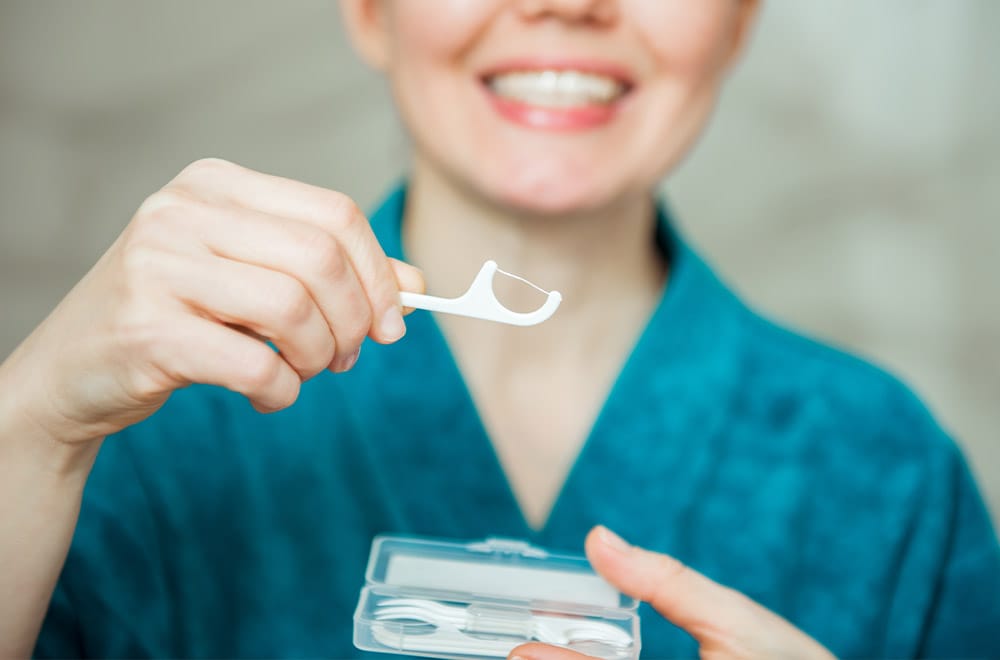
Hotel sourcing deserves particular attention because the buying criteria differ from conventional consumer retail.
The product often needs to fit inside an existing amenity kit or bathroom presentation.
This creates dimensional constraints.
A buyer may need to define:
the maximum wrapper length, wrapper width, number of picks per guest kit, logo position, required outer bag quantity, carton size, and distribution method.
A full retail box is often unnecessary.
Instead, hotels may receive larger bulk packages containing individually wrapped units for internal distribution.
For international hotel groups, centralized brand artwork can also be used across multiple properties while logistical labeling varies by destination.
This makes packaging engineering and carton organization especially important.
Individually Wrapped Floss Picks for Restaurants
Restaurant projects tend to prioritize convenience and distribution efficiency.
Products may be placed near payment counters, offered after meals, provided inside takeaway packages, or distributed with other small hygiene products.
The wrapper can carry a restaurant logo or remain neutral depending on the program.
For premium restaurants, the material and appearance of the floss pick may also contribute to the desired presentation.
A brightly colored conventional plastic pick may suit one concept, while another hospitality brand may prefer a more understated material and minimalist wrapper.
There is no universal “premium” floss pick. Premium positioning comes from consistency between product, packaging, and brand identity.
Sustainability and Individual Packaging
Individual wrapping creates an obvious sustainability trade-off.
It provides convenience and unit-level protection, but it also adds packaging material to every floss pick.
Brands should acknowledge this during product development rather than attempting to solve the issue with vague environmental claims.
A useful strategy may include selecting a lower-material wrapper, reducing wrapper dimensions where technically practical, using appropriately sourced paper-based packaging, optimizing carton sizes, or selecting alternative handle materials.
However, packaging claims need to be specific.
The U.S. Federal Trade Commission advises businesses against broad, unqualified environmental statements such as “green” or “eco-friendly” when they cannot be properly substantiated. FTC Environmental Claims guidance
For example, if only the outer retail carton is recyclable, the package should not imply that every component of the floss pick and individual wrapper has the same property.
Specific environmental information is usually more credible than general green marketing language.
Product Standards and Performance
Integrated floss-and-handle products are not simply packaging accessories.
ISO 28158:2018, titled Dentistry — Integrated dental floss and handles, specifies requirements and test methods for manually used integrated dental floss and handles. ISO 28158:2018 standard overview
For B2B buyers, this reinforces an important sourcing principle: even when packaging is the main differentiator, the underlying floss pick needs an appropriately controlled product specification.
Brands should determine which regulations, standards, test methods, and documentation apply to the exact product and destination market before finalizing production and product claims.
Requirements can vary depending on product construction and where the product will be sold.
Quality Control Should Cover Product and Packaging
Individually wrapped dental floss picks require two levels of quality control.
The first relates to the floss pick.
Typical checks include handle dimensions, handle surface, floss tension, attachment security, appearance, color, and product consistency.
The second relates to the wrapper.
Packaging inspection may include:
| QC Item | What to Check |
|---|---|
| Wrapper alignment | Product positioned correctly |
| Seal integrity | No open or incomplete seals |
| Print registration | Artwork positioned correctly |
| Print clarity | Logo and text readable |
| Wrapper damage | No tears or punctures |
| Easy opening | Reasonable consumer access |
| Product count | Correct units per package |
| Inner packing | Proper organization |
| Retail carton | Correct artwork and labeling |
| Export carton | Adequate protection and identification |
A product can pass the first group of checks and still fail commercially because of packaging defects.
Both need to be included in the approved quality standard.
Why Packaging Samples Should Be Tested Before Production
A common mistake is approving the floss pick first and reviewing printed packaging only after mass production has started.
Instead, buyers should request a complete packaged sample whenever possible.
This allows the buyer to evaluate the actual combination of product, wrapper, printing, and secondary packaging.
Several issues may only become visible at this stage.
A handle color may clash with the printed wrapper. A logo may appear too small. A wrapper may be longer than necessary. The seal may sit too close to printed text. A retail box may contain excessive empty space.
These details are inexpensive to correct before mass production and much more difficult to solve afterward.
How to Build a Retail Pack
For retail brands, the individually wrapped floss pick is only the first packaging level.
The outer pack still needs to communicate the product clearly.
A useful retail pack should establish:
what the product is, how many units are included, the primary product benefit, relevant material information, usage instructions when required, brand identity, and destination-market labeling.
The package should not become overloaded with claims.
Individually wrapped products already have a strong convenience proposition. It is usually better to communicate that benefit clearly than surround it with numerous vague marketing statements.
A front-panel message such as “30 Individually Wrapped Floss Picks for Travel and Daily Use” tells consumers exactly what they are receiving.
Pack Count Should Match the Use Case
There is no universally correct quantity.
Small packs can be suitable for travel, sampling, convenience stores, guest amenities, or trial products.
Medium-count cartons can target ordinary consumer retail.
Larger bulk formats may be appropriate for hospitality distributors, clinics, restaurants, or business-to-business repacking.
When selecting a count, brands should consider usage frequency and packaging efficiency rather than simply copying competing products.
The outer dimensions matter as well.
Increasing pack count can reduce packaging material per floss pick, but an oversized retail package may occupy unnecessary shelf or shipping space.
Finding the right balance requires evaluating both product economics and logistics.
Shipping Efficiency Matters at Scale
Small packaging decisions become significant when millions of units are shipped.
Adding only a few millimeters to an individual wrapper can increase the dimensions of the inner package, which can then affect retail carton size, master carton size, pallet loading, and container utilization.
For large B2B programs, buyers should therefore request final packing information before approving the product.
Useful data include:
units per inner pack, inner packs per carton, carton dimensions, gross weight, net weight, and pallet or container configuration where applicable.
A visually attractive package that creates inefficient transportation may not be the strongest long-term design.
Private-Label Development Workflow
A structured development process reduces unnecessary revisions.
The project should normally begin with the market and use case rather than artwork.
First, define who will use the product and where.
Next, select the floss pick style, handle material, dimensions, floss specification, flavor if required, and color.
Then confirm the individual wrapper structure and dimensions.
After the physical specification is stable, create branding and packaging artwork.
Samples can then be reviewed for product performance, wrapper quality, printing, and outer packaging.
Once the approved reference sample and specifications are confirmed, the project can proceed to mass production under defined quality criteria.
Richsource supports product and packaging customization across its broader oral care manufacturing range, enabling brands to coordinate floss picks with dental floss, interdental brushes, tongue cleaners, and related products when building a broader private-label range.
Questions to Ask a Floss Pick Manufacturer
A strong supplier discussion should cover both product engineering and packaging capability.
Ask which floss pick handle materials and designs are available, which floss specifications can be used, whether color can be customized, and how floss tension is controlled.
For packaging, ask which wrapper materials are compatible with existing equipment, what print methods are available, how many colors can be reproduced, what the minimum printable area is, and how seal consistency is checked.
Buyers should also confirm whether complete packaged samples are available before mass production.
Additional questions should address MOQ, artwork requirements, lead time, quality-control procedures, secondary packaging, carton specifications, production capacity, and documentation relevant to the destination market.
A supplier that understands only the floss pick but outsources all packaging without coordinated quality management may create additional complexity for a private-label project.
Common Sourcing Mistakes
One of the most common mistakes is selecting individual wrapping simply because it looks more hygienic or premium without confirming whether the target customer actually needs it.
The additional material and production steps should create a real benefit.
Another mistake is focusing heavily on wrapper design while using a generic low-quality floss pick. Consumer experience still depends primarily on product performance.
Brands also sometimes approve artwork before confirming printable dimensions. This can result in repeated design revisions.
Environmental claims are another risk. A paper-looking wrapper does not automatically mean the complete product is plastic-free, compostable, or environmentally preferable in every respect.
Finally, buyers may compare quotations without normalizing specifications.
A quotation for 100 individually wrapped picks in a printed retail carton should not be compared directly with a quotation for 100 generic picks in unprinted bulk packaging.
Frequently Asked Questions
What are individually wrapped dental floss picks?
Individually wrapped dental floss picks are integrated floss-and-handle products packaged separately in individual wrappers. The format is commonly suited to travel, hospitality, restaurants, clinics, sampling, and convenience-focused retail products.
Are individually wrapped floss picks more hygienic?
Individual packaging reduces direct handling and environmental exposure before the wrapper is opened. However, buyers should distinguish “individually wrapped” from “sterile,” because sterility requires specific validated processes and should not be claimed without appropriate evidence.
Can the wrapper be printed with a custom logo?
Yes. Depending on the selected packaging process, private-label programs may use custom logos, patterns, brand names, colors, or other artwork on individual wrappers. The printable area and production method should be confirmed before final artwork is prepared.
Are individually wrapped dental floss picks suitable for hotels?
Yes. Hotels and other hospitality businesses can distribute individually packaged units in guest rooms, amenity kits, reception areas, or travel packs. Packaging dimensions, branding, and bulk packing can be developed around the hospitality application.
Can eco-friendly floss picks be individually wrapped?
Alternative-material or sustainability-focused floss picks can also use individual packaging. However, buyers should evaluate the environmental characteristics of the handle, floss, individual wrapper, retail packaging, and disposal conditions separately rather than making a broad environmental claim about the entire product.
Conclusion
Individually wrapped dental floss picks are not simply standard floss picks with an extra layer of packaging. When developed correctly, they become a specialized format for hospitality, travel, food service, clinics, sampling, retail, and private-label oral care programs.
Successful sourcing requires the product and packaging to be developed as one system.
Handle material, floss tension, product dimensions, wrapper structure, seal quality, easy opening, printing, pack quantity, retail packaging, carton configuration, and quality inspection all contribute to the final result.
Brands should begin by defining where the floss pick will be used. A hotel amenity product needs a different packaging strategy from a pharmacy retail carton or family-size household pack.
The same principle applies to branding. Individual wrappers offer valuable visibility, but effective design usually favors clear, restrained communication rather than filling every available millimeter with text.
For larger B2B projects, buyers should also evaluate manufacturing consistency and applicable product requirements. ISO 28158 provides an established reference for integrated dental floss and handles, while organizations such as the ADA provide authoritative guidance on the role of floss and other interdental cleaners in oral hygiene.
Richsource supplies customizable floss picks and other interdental care products for private-label and B2B programs. Buyers developing hospitality packs, branded individually wrapped dental floss picks, retail oral care products, or broader customized ranges can contact Richsource to discuss product specifications, packaging, branding, samples, OEM/ODM requirements, and production options.