Table of Contents
Key Takeaways
- Braces create extra spaces around brackets, wires, and between teeth where ordinary brushing may not provide complete access.
- Dental teeth cleaning tools for orthodontic care commonly include orthodontic floss picks, interdental brushes, dental floss, floss threaders, toothbrushes, and water flossers.
- Different tools solve different cleaning problems, so using several complementary products is usually more practical than depending on one device.
- Orthodontic floss picks are useful when traditional floss is difficult to guide around wires.
- Braces interdental brushes are particularly useful for cleaning around brackets, under wires, and through wider spaces.
- Correct brush sizing and gentle technique matter more than aggressive pressure.
- Portable cleaning tools can make it easier to maintain an oral care routine at school, work, or while traveling.
- Oral care brands developing an orthodontic range should consider handle geometry, floss tension, brush size, packaging hygiene, materials, and product instructions.
Braces can make everyday tooth cleaning more complicated. Brackets, archwires, bands, and other orthodontic components introduce additional surfaces and small spaces where plaque and food debris can collect.
A normal toothbrush remains essential, but it cannot always reach beneath wires or around every edge of a bracket. This is why carefully selected dental teeth cleaning tools become particularly important during orthodontic treatment.
The American Association of Orthodontists recommends cleaning difficult areas around braces with an interproximal brush and flossing regularly. The American Dental Association also recognizes floss, small interdental brushes, picks, and water flossers as options for cleaning spaces that toothbrush bristles cannot effectively reach.
For users, the challenge is not simply finding more products. It is understanding which dental teeth cleaning tools work best for each area of the mouth and how they should be used safely.
Why Braces Need Specialized Dental Teeth Cleaning Tools

Orthodontic appliances change the physical environment around the teeth. A smooth tooth surface becomes a more complex structure containing wires, brackets, elastic components, and narrow access points.
According to the American Association of Orthodontists, braces create additional hard-to-reach areas where food, plaque, and bacteria can accumulate. That makes cleaning technique and tool selection more important throughout orthodontic treatment.
Brackets Create New Plaque-Retention Areas
A bracket sits directly on the tooth surface. Its edges create small zones above, below, and beside the bracket that conventional brushing may not fully reach.
Dental teeth cleaning tools designed with small working heads or narrow cleaning elements can reach these areas more effectively.
Wires Limit Straight-Line Flossing
Traditional floss normally passes vertically between adjacent teeth. With fixed braces, an archwire can interrupt that movement and make conventional flossing less convenient.
Special orthodontic floss picks, floss threaders, and appropriately designed floss systems can help users navigate around the wire.
Food Can Become Trapped Around Appliances
Fibrous or sticky food particles can become lodged around brackets and wires. Removing visible debris is only one part of cleaning; plaque along the tooth and gumline also needs regular attention.
Cleaning Is About Access, Not Force
One of the most important concepts in orthodontic cleaning is access.
Using additional pressure does not compensate for using the wrong tool. A small interdental brush positioned correctly may reach an area more efficiently than a large brush pushed aggressively around the appliance.
Essential Dental Teeth Cleaning Tools for Braces
There is no single tool that performs every part of orthodontic cleaning. A practical routine combines products according to the area being cleaned.
1. Orthodontic Floss Picks
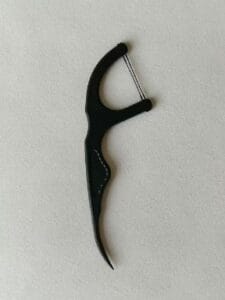
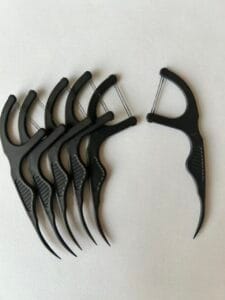
An orthodontic floss pick is designed to make interdental cleaning easier for people wearing fixed braces. Unlike a conventional floss pick, orthodontic designs may include a thinner arm or specialized shape intended to pass beneath an archwire.
Richsource includes an Orthodontic Floss Pick within its dental floss pick range, alongside adult, kids, biodegradable, bamboo, bamboo charcoal, eco-friendly, and plastic-free variations.
Why the Handle Design Matters
The handle gives the user direct control over the floss segment. This can be useful when access behind the archwire is limited.
A stable grip can also make cleaning posterior teeth easier for people who struggle with conventional string floss.
Floss Tension
The floss should remain sufficiently tensioned to pass through the contact point while still allowing controlled movement against the side of the tooth.
Floss that becomes loose too quickly may be difficult to maneuver around brackets.
2. Braces Interdental Brushes
An interdental brush contains a small cluster of bristles designed to enter spaces that a conventional toothbrush cannot access.
Richsource’s Interdental Brush range includes straight, angled, flexible, dental-clinic, and braces-oriented versions. The company specifically identifies orthodontic appliances as an application for these products.
Around Brackets
The small brush head can be guided around the upper and lower edges of a bracket where plaque may accumulate.
The movement should remain gentle rather than using the brush like a scraping instrument.
Under Archwires
A small interdental brush can often pass underneath an archwire and clean the space between the wire and tooth surface.
This is one of the areas where a standard toothbrush may have limited access.
Between Teeth
Interdental brushes can also clean larger spaces between teeth when an appropriate brush diameter is selected.
ADA guidance notes that floss may suit tighter contacts, while interdental brushes can be appropriate for more open spaces.
3. Traditional Dental Floss
String floss remains an important part of interdental cleaning. For people with braces, however, it usually needs to be passed beneath the orthodontic wire before it can move between the teeth.
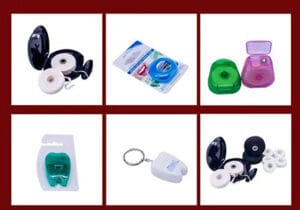
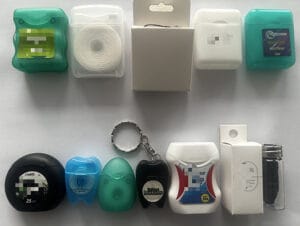
Richsource offers different Dental Floss formats, including waxed, biodegradable, eco-friendly, and customizable floss rolls.
Waxed Floss
Waxed floss has a smoother outer surface that may make threading through tight contacts easier.
It can be particularly practical when the user needs to maneuver the floss around an orthodontic appliance.
Thin Floss
Thin floss may work better in narrow tooth contacts.
For additional information about how different floss structures affect use, readers can explore Richsource’s Advanced Guide to Types of Dental Floss.
4. Floss Threaders
A floss threader acts as a flexible guide that carries string floss beneath the archwire.
Once the floss passes under the wire, the user can clean the adjacent tooth surfaces in a similar way to conventional flossing.
When Is a Threader Useful?
It can be particularly useful when a standard floss pick does not fit beneath the orthodontic wire or when the user prefers ordinary floss.
The limitation is that each interdental space may require additional threading, making the process slower.
5. Orthodontic Toothbrushes
A toothbrush remains the central tool in every braces cleaning routine.
Small brush heads are useful because they provide greater control around individual brackets, while appropriate bristle arrangements can improve contact above and below orthodontic hardware.
Manual Toothbrush
Manual brushes are accessible and easy to carry.
Their effectiveness depends heavily on positioning and cleaning technique.
Electric Toothbrush
Electric toothbrushes automate some of the brushing motion, but users still need to position the head around brackets, wires, gumlines, and posterior surfaces.
An electric toothbrush does not eliminate the need for dental teeth cleaning tools that specifically clean interdental spaces.
6. Water Flossers
Water flossers direct a controlled stream of water around teeth and orthodontic appliances.
They may be convenient for users who find string floss difficult to manipulate. However, device selection and technique should follow professional guidance and manufacturer instructions.
7. Tongue Scrapers
Braces primarily affect tooth cleaning, but a complete oral hygiene routine also includes the tongue.
A Tongue Scraper removes surface coating and debris from the tongue and complements brushing and interdental cleaning.
A Complementary Tool
A tongue scraper should not be viewed as an alternative to floss or an interdental brush.
Each product serves a different cleaning zone.
Dental Teeth Cleaning Tools Comparison for Braces
| Tool | Main Cleaning Area | Braces Compatibility | Ease of Use | Best Application |
|---|---|---|---|---|
| Orthodontic floss pick | Between teeth | Excellent | High | Daily interdental cleaning |
| Braces interdental brush | Around brackets and under wires | Excellent | High | Difficult orthodontic spaces |
| Traditional dental floss | Between teeth | Good | Moderate | Tight contacts |
| Floss threader | Beneath archwire | Excellent | Moderate | Guiding floss around wires |
| Manual toothbrush | Tooth and bracket surfaces | Excellent | High | Main daily brushing |
| Electric toothbrush | Tooth and bracket surfaces | Excellent | High | Consistent powered brushing |
| Water flosser | Around appliances and gumline | Very good | High | Supplemental cleaning |
| Tongue scraper | Tongue surface | Not appliance-specific | Very high | Complementary oral hygiene |
The table shows why dental teeth cleaning tools for braces should be considered a system rather than a single product.
A toothbrush handles broad surfaces. Floss works between tight contacts. An interdental brush accesses brackets and wider spaces. Other products can then support specific cleaning requirements.
Orthodontic Floss Pick vs Interdental Brush
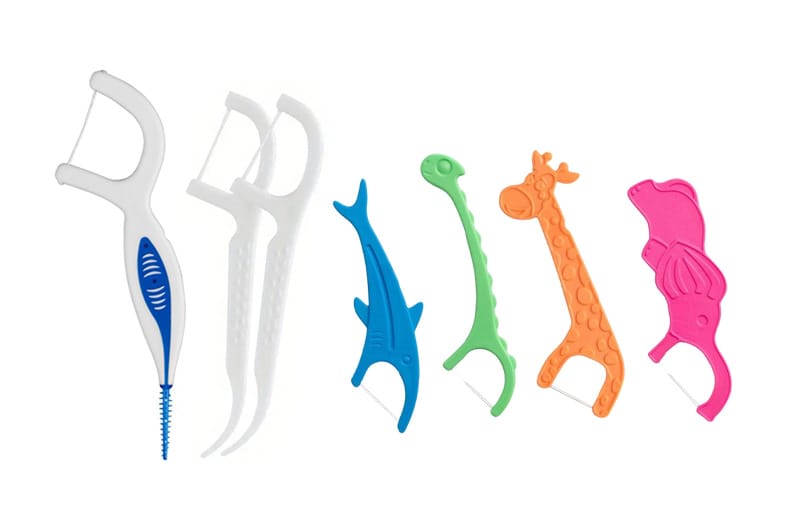
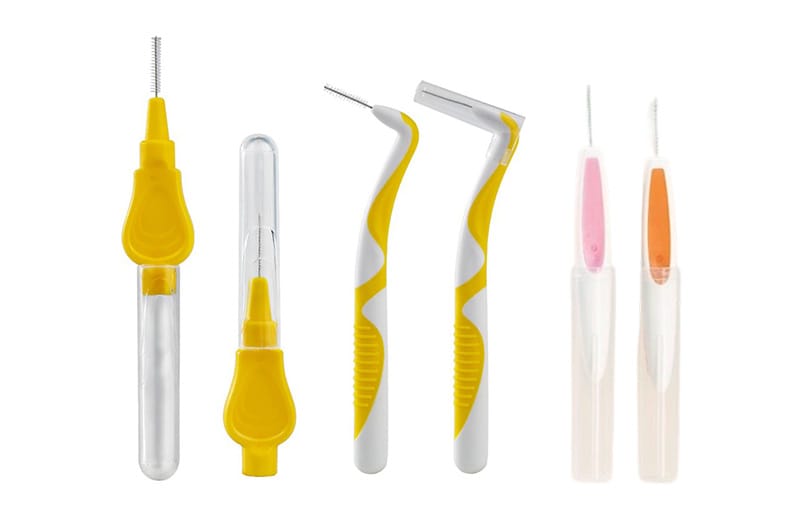
These are two of the most relevant products for Richsource’s orthodontic product portfolio, but they perform different functions.
Orthodontic Floss Pick
An orthodontic floss pick is primarily intended to clean between adjacent teeth.
Its narrow profile and handled format can reduce some of the manipulation required by conventional floss.
Braces Interdental Brush
A braces interdental brush is more suitable for cleaning around brackets, underneath wires, and in spaces wide enough to accommodate the brush.
The bristles provide multiple contact points around irregular orthodontic structures.
Which One Is Better?
Neither should automatically replace the other.
A person may use an interdental brush around brackets and then use an orthodontic floss pick between tight tooth contacts.
Selection by Cleaning Zone
Think about the area first:
- Between two tightly contacting teeth: floss or orthodontic floss pick
- Beneath the archwire: orthodontic floss pick, threader, or small interdental brush depending on access
- Around bracket edges: interdental brush
- Wider interdental spaces: appropriately sized interdental brush
- General tooth surfaces: toothbrush
This approach makes dental teeth cleaning tools easier to select because each product has a defined purpose.
How to Choose the Right Interdental Brush Size
Brush size is one of the most important variables in interdental cleaning.
A brush that is too small may provide insufficient surface contact. A brush that is too large may bend or require excessive pressure to enter the space.
Light Resistance Is the Goal
The brush should enter with light resistance.
Users should not force an interdental brush into an area where it clearly does not fit.
Different Areas May Need Different Sizes
Interdental spaces vary across the mouth.
Front teeth may require one diameter while posterior areas or orthodontic spaces around brackets may require another.
Ask an Orthodontic Professional When Unsure
The orthodontist, dentist, or dental hygienist can recommend suitable sizes and demonstrate the insertion angle.
This is especially useful at the beginning of orthodontic treatment when the appliance is unfamiliar.
A Practical Daily Braces Cleaning Routine
Dental teeth cleaning tools provide the most value when they are incorporated into a repeatable routine.
Step 1: Check the Braces
Before cleaning, look for trapped food and inspect the appliance for anything unusual.
If a wire or bracket appears loose or damaged, contact the orthodontic provider instead of trying to reposition it with a cleaning instrument.
Step 2: Use an Interdental Brush Around Brackets
Guide the interdental brush carefully around each bracket and beneath accessible wire areas.
Avoid sudden or aggressive movements.
Work Systematically
One practical method is to move from one side of the mouth to the other.
A consistent sequence reduces the chance of repeatedly cleaning one area while missing another.
Step 3: Clean Between Teeth
Use an orthodontic floss pick, conventional floss with a threader, or another recommended interdental method.
Guide floss gently between contacts rather than snapping it into the gums.
Step 4: Brush Every Tooth Surface
Brush the gumline, the area above the bracket, the bracket surface, the area below it, and the chewing surface.
Posterior teeth deserve extra attention because visibility and access are more limited.
Step 5: Clean the Tongue
Use a tongue scraper gently from the back toward the front.
Rinse the tool after each pass.
Step 6: Rinse and Store Reusable Tools
Reusable dental teeth cleaning tools should be rinsed and allowed to dry according to the manufacturer’s instructions.
Replace interdental brushes if the bristles become visibly worn or the wire becomes damaged.
Common Mistakes With Dental Teeth Cleaning Tools
Correct product selection does not guarantee correct use.
Several common mistakes can reduce cleaning effectiveness or make orthodontic care uncomfortable.
Using Only a Toothbrush
Brushing is essential, but braces introduce narrow areas that brush bristles may not fully access.
Adding an interdental cleaning method helps reach those spaces. The ADA specifically recognizes cleaning between teeth as an important complement to toothbrushing.
Choosing an Oversized Interdental Brush
A larger brush is not automatically more effective.
If a brush must be forced into the space, choose a smaller size or ask a dental professional for guidance.
Snapping Floss Into the Gums
Floss should move through the contact point with control.
Aggressive downward pressure can irritate the gum tissue.
Using Sharp Dental Instruments
Professional scalers, probes, and metal scraping instruments are not substitutes for ordinary dental teeth cleaning tools.
Hardened tartar cannot simply be managed by increasing scraping pressure at home. ADA guidance notes that tartar requires professional removal.
Ignoring the Area Behind the Wire
Visible tooth surfaces may appear clean while plaque remains along bracket edges or behind an archwire.
An interdental brush can help access these areas.
Using Damaged Tools
Bent interdental brush wires, rough plastic edges, loose floss, or cracked handles should not remain in routine use.
A damaged product may become difficult to control.
Dental Teeth Cleaning Tools for School, Work, and Travel
Orthodontic cleaning does not only happen at home.
People wearing braces often eat several times throughout the day, making portable oral care increasingly relevant.
Compact Floss Picks
Floss picks require little storage space and can be placed in a compact personal hygiene kit.
Individually protected packaging can also help keep the working area clean before use.
Capped Interdental Brushes
A protective cap keeps the brush head from contacting unrelated items inside a bag.
The cap may also extend the handle on certain product designs, improving reach.
Portable Dental Floss
A small floss dispenser can fit easily in a pocket, backpack, travel kit, or handbag.
Travel Tongue Scraper
Compact tongue scrapers can complement a portable oral care set without adding significant volume.
Product Opportunity for Oral Care Brands
From a product-development perspective, orthodontic care is well suited to multi-product kits.
A compact set might combine orthodontic floss picks, interdental brushes, floss, and tongue cleaning products based on the intended market and user scenario.
What Should Brands Look for in Orthodontic Dental Tools?
Richsource’s current portfolio makes orthodontic cleaning a logical category for product expansion. The company already manufactures dental floss picks, braces interdental brushes, floss rolls, tongue scrapers, and other oral care products.
For brands, distributors, clinics, and retailers, product evaluation should go beyond appearance.
Handle Geometry
The handle should allow the user to control the working end around posterior teeth and orthodontic hardware.
Angles, grip textures, and handle length all influence usability.
Floss Strength
Floss should maintain stable tension and resist unnecessary shredding during normal use.
This becomes particularly important when the product is maneuvered around orthodontic hardware.
Brush Flexibility
An interdental brush needs enough flexibility to enter challenging spaces without becoming unstable.
The wire and bristle construction should support controlled movement.
Material Selection
Dental teeth cleaning tools may use conventional polymers, alternative materials, bamboo-based components, biodegradable materials, nylon filaments, and different floss fibers.
The material should match the product’s functional requirements rather than being selected only for marketing appearance.
Packaging Hygiene
Orthodontic products are frequently used outside the home.
Individual protection, travel cases, caps, and resealable formats can therefore add practical value.
Size Identification
When several interdental brush sizes are supplied, users need an easy way to distinguish them.
Color coding, clearly marked packaging, or diameter information can simplify daily use.
Product Instructions
The packaging should explain where and how the tool is intended to be used.
Clear instructions are particularly important for orthodontic products because first-time users may be unfamiliar with cleaning around wires.
OEM and Private-Label Opportunities for Orthodontic Oral Care

Richsource provides OEM/ODM development across dental floss picks, interdental brushes, dental floss, tongue scrapers, and related oral care products. Its current product pages list customization options covering materials, length, packaging, fragrance, logo, and color.
This allows brands to develop orthodontic product ranges for different channels.
Orthodontic Floss Pick Programs
Brands can consider variables such as:
- Handle structure
- Pick dimensions
- Floss material
- Floss tension
- Packaging quantity
- Brand color
- Logo
- Individual wrapping
- Eco-oriented material positioning
Braces Interdental Brush Programs
Relevant variables include:
- Brush diameter
- Straight or angled handle
- Wire flexibility
- Bristle configuration
- Protective cap
- Color coding
- Travel packaging
- Multi-size sets
Complete Orthodontic Care Sets
Rather than treating each item as an isolated SKU, brands can develop coordinated dental teeth cleaning tools for specific user situations.
For example, a braces-focused set can combine a floss solution with interdental brushes and portable cleaning accessories.
This type of product architecture also creates natural internal relationships between multiple product categories on an oral care website.
Dental Teeth Cleaning Tools and Sustainable Materials
Sustainability has become an increasingly visible part of oral care product development.
Richsource currently lists biodegradable, eco-friendly, bamboo, bamboo charcoal, and plastic-free variations within its floss pick portfolio.
Biodegradable Handles
Alternative handle materials can reduce dependence on conventional plastics in certain product formats.
However, structural stability remains essential because orthodontic tools need precise control.
Bamboo-Based Products
Bamboo can provide a distinct material appearance and sustainability positioning.
Its suitability depends on product design, finishing quality, moisture resistance, and intended use.
Reduced Packaging
Packaging optimization can reduce unnecessary material while maintaining hygiene.
For travel-oriented orthodontic dental teeth cleaning tools, the balance between protection and material efficiency is particularly important.
Sustainability Should Not Compromise Function
An eco-oriented product still needs reliable floss tension, smooth edges, adequate handle strength, and controlled use.
Environmental positioning works best when it supports rather than replaces basic product performance.
Conclusion
Braces change the way the mouth needs to be cleaned, but they do not require complicated or aggressive methods.
The most practical approach is to match dental teeth cleaning tools to specific cleaning areas.
A toothbrush handles broad tooth surfaces. An orthodontic floss pick or threaded floss reaches tight interdental contacts. A braces interdental brush works around brackets, beneath wires, and in more accessible spaces. Tongue cleaners and other complementary products can complete the routine.
For users, correct sizing, gentle technique, and consistency matter more than the number of products used.
For oral care brands, orthodontic cleaning also creates an opportunity to develop a coordinated product family rather than isolated tools. Richsource’s existing floss pick, interdental brush, dental floss, and tongue scraper manufacturing capabilities can support both individual products and customized oral care collections.
Explore Richsource’s Dental Floss Picks, Interdental Brushes, and Dental Floss to learn more about available formats and OEM/ODM customization.
FAQ
What dental teeth cleaning tools are best for braces?
A practical braces routine normally uses a toothbrush together with an interdental cleaning method. Orthodontic floss picks, floss with a threader, braces interdental brushes, and water flossers may help reach areas around brackets and wires that ordinary brushing cannot access effectively.
Are interdental brushes safe to use around braces every day?
Interdental brushes are commonly used around orthodontic appliances when the correct size and technique are selected. The brush should move through the intended space with light resistance rather than being forced. If the wire bends repeatedly or cleaning causes persistent discomfort, ask an orthodontic professional about sizing.
Is an orthodontic floss pick better than normal floss for braces?
An orthodontic floss pick can be more convenient because its structure is designed to help navigate around fixed orthodontic wires. Traditional floss can also work effectively when used with a floss threader. The better choice depends on appliance design, tooth spacing, dexterity, and individual preference.
Can an interdental brush replace floss when I have braces?
Not always. An interdental brush works particularly well around brackets, wires, and wider spaces, while floss can contact the sides of teeth in tighter interdental areas. Many braces users therefore use both types of dental teeth cleaning tools rather than relying on only one method.
How do I know which interdental brush size I need for braces?
The brush should enter the space with gentle resistance without requiring force. Because different areas of the mouth may have different spacing, more than one size may be appropriate. An orthodontist, dentist, or dental hygienist can demonstrate the correct size and insertion angle for individual areas.
Authoritative External Resources
- American Dental Association – Dental Floss and Interdental Cleaners
- American Association of Orthodontists – Oral Hygiene During Orthodontic Treatment
- American Association of Orthodontists – Preventing White Spots With Braces
- Wikipedia – Orthodontics
Medical note: This article provides general educational information. Individual orthodontic appliances and oral conditions differ, so users should follow the cleaning instructions provided by their dentist or orthodontist.
Users researching braces frequently need information about more than one tool.
Richsource already has several related resources that can support a stronger internal content cluster.
For a broader explanation of different interdental brush structures, see What Are Interdental Brushes?.
For comparing floss with brush-based interdental cleaning, read Are Interdental Brushes Better Than Flossing?.
Users choosing among floss materials can continue to the Advanced Guide to Types of Dental Floss.
Brands developing a broader collection can explore Richsource’s complete Oral Care Products range.
Stay Connected! 🌟
Thanks for reading! If you enjoyed this article, don’t forget you can follow me on social media for more insights, updates, and behind-the-scenes content:
Facebook – Join the conversation and get the latest updates
YouTube – Watch tutorials, demos, and in-depth guides
Instagram – See tips, visuals, and daily inspiration
Let’s continue learning and growing together—stay connected and never miss a beat!