Table of Contents
Introduction
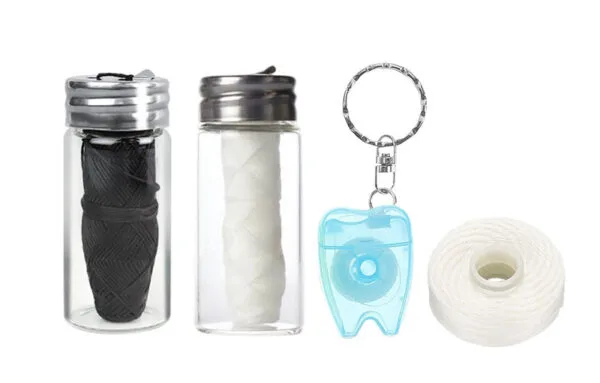
Choosing between dental floss manufacturers is more complicated than finding a factory capable of putting floss into a dispenser.
For distributors, oral care brands, pharmacies, supermarkets, private-label companies, and importers, the real question is whether a manufacturer can repeatedly produce the same floss specification, control raw materials, customize the product for a target market, maintain packaging quality, provide relevant documentation, and scale production when demand increases.
A dental floss program may involve filament material, thickness, tensile performance, wax or coating, flavor, color, spool length, dispenser design, cutting structure, retail packaging, labeling, and shipping configuration. A weakness in any one of these areas can affect the finished product.
The sourcing decision therefore needs to consider the complete manufacturing system rather than the appearance of one sample or the lowest quotation.
Richsource develops customizable dental floss products for wholesale, private-label, OEM, and ODM projects, with different material, coating, flavor, dispenser, and packaging possibilities. For buyers comparing potential production partners, the following criteria provide a more reliable framework than price alone.
Start With the Product You Actually Need
One of the most common sourcing mistakes is contacting multiple factories before establishing a clear product specification.
A request such as “Please quote dental floss” is too broad to generate meaningful comparisons.
One dental floss manufacturer may quote a basic nylon floss with a standard dispenser, while another may assume waxed mint floss with customized packaging. A third supplier may offer a different strand thickness or spool length.
The quotations can appear to describe the same product even though the specifications are substantially different.
Before approaching dental floss manufacturers, buyers should define the intended market and consumer.
Is the floss intended for ordinary family use, premium oral care, sensitive users, tight interdental spaces, travel, hotels, pharmacies, supermarket private label, or an environmentally positioned product line?
Once the application is clear, technical choices become easier to evaluate.
What Should Be Included in a Dental Floss Specification?
A written specification is one of the most useful tools in B2B procurement.
It gives suppliers a common basis for quotation and later becomes a reference for sample approval, mass production, inspection, and repeat orders.
A useful dental floss specification may include:
| Specification | What the Buyer Should Define |
|---|---|
| Floss material | Nylon, monofilament, alternative material, or another construction |
| Structure | Multifilament, monofilament, woven, textured, or other |
| Thickness | Target diameter or product specification |
| Surface | Smooth, textured, expanding, or other requirement |
| Coating | Waxed, unwaxed, or customized coating |
| Flavor | Mint, unflavored, or another available option |
| Color | Standard or customized |
| Tensile performance | Required strength and consistency |
| Floss length | Length per dispenser |
| Dispenser | Standard mold or customized design |
| Cutter | Cutting performance and material |
| Package quantity | Units per retail pack |
| Branding | Logo, artwork, labels, and private-label requirements |
| Market | Destination country or region |
| Order volume | Trial quantity and expected regular demand |
Without these details, it is difficult to know whether one manufacturer’s quotation genuinely offers better value.
Evaluate Whether It Is a Manufacturer or Only a Trading Company
For some projects, working with a trading company may be acceptable. For long-term OEM or private-label programs, however, understanding who actually controls production becomes important.
A genuine manufacturing partner should normally be able to explain how dental floss is produced, how the strand specification is controlled, which manufacturing steps are completed internally, how packaging is managed, and how finished products are inspected.
A buyer should ask practical questions rather than simply asking:
“Are you a factory?”
For example:
Who controls the floss specification?
Where is the product assembled?
Who operates the packaging line?
How are production samples approved?
Who is responsible for quality inspection?
Can the manufacturing process accommodate custom specifications?
What happens when a production defect is identified?
Specific answers provide more useful evidence than a simple factory claim.
Manufacturing Experience Matters, but Experience Alone Is Not Enough
Years in business can provide useful context because experienced manufacturers have usually encountered a wider variety of materials, packaging structures, customer requirements, and production problems.
But buyers should not choose a supplier only because it claims a large number of years in the industry.
The more important question is whether that experience relates to the exact products being sourced.
A company with extensive toothbrush experience is not automatically an expert dental floss manufacturer.
Ask the supplier how long it has manufactured dental floss, which types of floss it produces regularly, what customization it handles internally, and which markets it commonly serves.
Richsource states that it has more than 15 years of R&D and oral care manufacturing experience, with a product portfolio covering dental floss, floss picks, interdental brushes, tongue cleaners, and related products.
That type of category experience becomes particularly useful when a buyer plans to expand from one dental floss SKU into a broader oral care range.
Examine Raw Material Control
Dental floss may use only a small amount of material per unit, but material consistency has a direct effect on product performance.
Variation in filament properties can influence thickness, tensile strength, surface feel, fraying, and consumer perception.
A professional dental floss manufacturer should therefore be able to identify the material used in the approved sample and maintain appropriate control when the order moves into mass production.
For B2B buyers, useful questions include where the material comes from, how incoming materials are checked, whether substitutions require customer approval, how batch information is controlled, and whether supporting material documentation is available where required.
This becomes even more important for environmentally positioned or specialty floss.
Terms such as biodegradable, bio-based, plastic-free, PFAS-free, natural, or recycled should not be accepted as specifications by themselves.
The buyer needs to understand what material creates the claimed characteristic and what supporting evidence exists.
Compare Floss Construction, Not Just Material Names
Two products described as “nylon dental floss” can feel very different.
The difference may come from filament count, twisting, thickness, coating, tension, surface structure, or manufacturing treatment.
This means buyers should not build specifications around material name alone.
A stronger evaluation considers the finished strand.
Does it slide easily through tight contacts?
Does it separate excessively?
Does it retain its structure after repeated movement?
Does the coating remain consistent?
Does the strand feel soft, firm, smooth, or textured?
Is the thickness consistent from one section to another?
These characteristics determine whether the material has been converted into a good consumer product.
Check Tensile Strength and Fraying Performance

Breakage is one of the fastest ways for consumers to lose confidence in dental floss.
A strand needs enough tensile strength to tolerate normal pulling during use, but simple breaking strength is not the only performance indicator.
Multifilament floss can sometimes retain acceptable overall strength while individual fibers begin to separate.
For this reason, sample testing should consider both breakage and fraying.
Buyers can compare several samples using repeated movements through different interdental conditions rather than testing only by pulling the strand between two hands.
For formal product programs, agreed test requirements should be incorporated into the specification and quality plan.
The goal is not to create unrealistic laboratory requirements for every purchase. It is to establish a reproducible definition of acceptable performance.
Coating Capability Can Differentiate Manufacturers
Waxing or coating affects much more than appearance.
It can influence glide, strand stability, flavor delivery, surface feel, and consumer preference.
A manufacturer capable of adjusting coating characteristics provides buyers with more product-development flexibility than one offering only a fixed standard floss.
For example, one private-label brand may want a smooth mint waxed floss designed around easy glide.
Another may prefer a more textured floss where the coating should not mask the strand structure.
A third may want an unflavored option with a minimal ingredient concept.
Dental floss manufacturers should therefore be evaluated on whether they understand the relationship between material, coating, flavor, and final user experience rather than simply offering a long list of options.
Flavor Should Be Treated as a Product Specification
Mint is common in oral care, but not every mint formulation produces the same consumer experience.
Flavor strength can range from subtle to highly noticeable.
A private-label brand should therefore approve the actual finished floss rather than selecting “mint” from a specification sheet and assuming the result will match expectations.
The same principle applies to other available flavors.
Buyers should consider how flavor changes during storage and whether the packaging system preserves the intended sensory profile.
For multinational projects, consumer preferences can also differ by market, making flavor another variable that may need regional customization.
Review the Dispenser as Carefully as the Floss
One of the easiest sourcing mistakes is focusing entirely on the strand.
Consumers interact with the dispenser every time they use the product.
A poor dispenser can make good floss feel like a low-quality product.
Check whether the lid opens and closes consistently, whether the spool rotates correctly, whether the floss feeds smoothly, and whether the cutter produces a clean cut without requiring excessive force.
The housing should also remain stable during normal storage and transportation.
For retail products, appearance matters as well.
Material, transparency, shape, color, label position, and printing all contribute to how consumers perceive the finished product.
A strong dental floss manufacturer should therefore treat the dispenser as part of the product rather than as an afterthought.
Standard Mold or Custom Mold?
Custom tooling is not necessary for every project.
For new brands or initial market testing, an existing dispenser mold can reduce development complexity and allow the team to focus on floss specification, branding, and packaging.
Custom molds become more attractive when a company wants a distinctive product shape, functional feature, proprietary visual identity, or a larger long-term program.
The decision should consider projected volume and strategic value.
A custom dispenser that looks different but provides no meaningful functional or brand advantage may add unnecessary complexity.
On the other hand, a well-designed proprietary structure can help a brand become more recognizable in a crowded oral care category.
When comparing manufacturers, buyers should ask whether mold design, mold development, testing, and production can be coordinated through the same supplier.
OEM and ODM Are Not the Same Level of Service
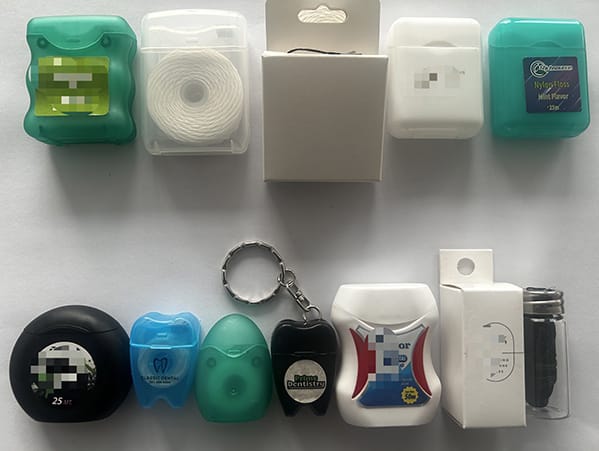
Dental floss manufacturers often use the terms OEM and ODM, but the actual level of support can vary considerably.
A basic OEM program may involve applying the buyer’s logo and packaging to an existing product.
A deeper customization project may include:
material selection, floss structure, coating, flavor, color, spool length, dispenser design, mold development, packaging structure, artwork support, sample development, and mass-production validation.
Buyers should therefore ask what the supplier means by “OEM/ODM.”
Can it change only the packaging?
Can it modify the floss specification?
Can it develop a new dispenser?
Can different materials be tested?
Can packaging prototypes be produced?
Can the manufacturer support a whole oral care product family?
The answers reveal how much of the development process the supplier can actually control.
Ask for Samples Before Making a Bulk Decision
A professional dental floss sourcing process should include sample evaluation.
Images, specifications, and video calls can eliminate obviously unsuitable suppliers, but they cannot fully communicate floss texture, glide, flavor, dispenser operation, or packaging feel.
Whenever practical, buyers should compare physical samples from several manufacturers under the same conditions.
Evaluate more than one unit from each supplier.
A single presentation sample may have been selected carefully and may not represent ordinary production variation.
Look for consistency across the sample set.
If the manufacturer offers several material, thickness, or coating options, request samples that allow meaningful comparison rather than randomly collecting many unrelated products.
The objective is to narrow the project toward a clearly approved specification.
Create a Golden Sample
Once the correct product has been selected, keep an approved reference sample.
This is sometimes called a golden sample or approval sample.
The sample should correspond to the written specification and, where practical, the approved packaging artwork.
During later production, the buyer, manufacturer, and inspection team can compare the mass-produced goods with the same reference.
This reduces subjective disagreements such as:
“The new floss seems thinner.”
“The mint flavor feels weaker.”
“The dispenser color looks different.”
“The carton feels less rigid.”
Instead of relying only on memory, all parties have an agreed physical reference.
For repeat orders, this becomes increasingly valuable.
Assess Quality Control Before Placing the Order
A quality-control system should be understood before mass production begins, not after a problem occurs.
Ask the manufacturer which points in the production process are inspected.
Incoming material inspection, in-process checks, assembly inspection, packaging control, and final shipment inspection may all contribute to consistency.
Richsource states that it uses a quality management system and performs three inspections before shipment as part of its production process.
For the buyer, the important next step is to translate broad QC statements into project-specific criteria.
Which dental floss characteristics will actually be checked?
What sampling level will be used?
Who approves deviations?
What happens if finished goods do not meet the agreed specification?
How will corrections be documented?
A strong supplier should be willing to discuss these details.
Understand Regulatory Requirements in the Target Market
Compliance cannot be treated as a generic certificate checklist.
Requirements vary by destination, product configuration, materials, labeling, and the role of the manufacturer or importer.
For the United States, the FDA currently classifies dental floss under regulation 21 CFR 872.6390 as a Class I dental device, product code JES. The FDA database also identifies ISO 28158 as a recognized consensus standard associated with this classification. FDA dental floss product classification
ISO 28158:2018 covers requirements and test methods for integrated dental floss and handles, and ISO records show that the standard was reviewed and confirmed in 2024, so the 2018 edition remains current as of 2026.
However, buyers should not assume that one standard or certificate automatically satisfies every requirement for every dental floss product and country.
Before launch, confirm the requirements that apply to the exact product and destination market.
Do Not Judge a Manufacturer Only by Certificates
Certificates can provide useful evidence, but documents should support manufacturing capability rather than replace evaluation of it.
A supplier may display numerous certificates while still having weak batch consistency, limited customization capability, slow communication, or poor packaging control.
Conversely, a technically capable manufacturer may possess documentation that is highly relevant to one market but unnecessary for another.
B2B buyers should therefore ask three questions:
Is this document relevant to my product?
Is it relevant to my destination market?
Does it cover the actual manufacturing site or product involved in my order?
This approach is more useful than counting logos on a website.
Evaluate Production Capacity Realistically
Large production capacity is valuable only if the manufacturer can maintain the approved specification while using it.
Buyers should therefore discuss both current order quantity and expected growth.
A supplier that works well for a 5,000-unit trial may struggle when orders increase to hundreds of thousands of units.
Conversely, a very large factory may not be the best fit for a highly experimental low-volume program.
Richsource reports a production base of more than 10,000 square meters and a team of more than 100 people, with capacity intended to support large-volume oral care orders.
For prospective buyers, these figures should become the beginning of the conversation rather than the end.
Ask how much capacity is allocated to the relevant product, how production schedules are managed, what normal lead times look like, and how repeat orders are prioritized.
Supply Stability Is More Important Than One Fast Delivery
Procurement teams often focus heavily on the first order.
Long-term brands should think about the tenth order.
Can the manufacturer supply the same floss material several months later?
Will dispenser color remain consistent?
Can packaging artwork be controlled by version?
Can the factory reproduce the same coating and flavor?
Are approved materials likely to remain available?
How does the manufacturer respond when a raw material supplier changes?
These questions become increasingly important once a product has entered retail and consumers expect consistency.
Changing dental floss specification after launch can create complaints even when the new version is technically acceptable.
The best dental floss manufacturers therefore control change as carefully as they control ordinary production.
Communication Is a Manufacturing Capability
Communication may appear separate from technical quality, but in customized manufacturing the two are closely connected.
Poor communication can produce the wrong material, incorrect artwork, outdated packaging, missed deadlines, or misunderstood tolerances even when the factory equipment is capable.
During the sampling stage, evaluate how the supplier handles technical questions.
Does the sales team confirm details or simply agree immediately?
Are specifications recorded clearly?
Are changes summarized after discussions?
Does the supplier identify conflicts between product design and manufacturing feasibility?
Are artwork versions controlled?
Are problems communicated early?
A manufacturer that raises a technical concern before production can be more valuable than one that says “yes” to every request.
Review Packaging Capabilities
Private-label dental floss rarely reaches the market as an unbranded spool.
Packaging is therefore a major part of supplier evaluation.
Depending on the sales channel, a project may require individual cartons, multi-packs, display boxes, blister packaging, travel sets, labels, barcodes, instruction inserts, or e-commerce shipping formats.
Ask whether packaging is handled internally or coordinated with external partners.
Either model can work, but responsibility needs to be clear.
The buyer should understand who checks packaging materials, printing, artwork version, barcode accuracy, package count, and final carton configuration.
For export projects, the master carton also needs sufficient strength to protect retail packaging during long-distance transportation.
Compare Total Value, Not Only Unit Price
A lower quoted unit price does not always produce a lower total procurement cost.
Consider the impact of:
higher defect rates, replacement shipments, inconsistent packaging, product complaints, repeated sampling, unstable lead times, customs documentation problems, and internal labor spent correcting supplier mistakes.
A manufacturer that provides stable materials, controlled specifications, accurate packaging, and reliable repeat production can create greater long-term value even when the initial quotation is not the lowest.
The objective of B2B sourcing should therefore be to obtain the required product consistently at a commercially sustainable total cost.
This is particularly important for private-label brands because manufacturing problems eventually become brand problems in the eyes of consumers.
Use a Supplier Evaluation Scorecard
When several manufacturers appear capable, a structured comparison prevents purchasing decisions from being dominated by one factor.
A practical scorecard might include:
| Evaluation Area | Suggested Focus |
|---|---|
| Product quality | Floss strength, texture, glide, consistency |
| Material control | Traceability and specification stability |
| Customization | Material, coating, flavor, dispenser, packaging |
| Manufacturing | Equipment, process control, capacity |
| Quality control | Incoming, process, and final inspection |
| Documentation | Relevance to product and market |
| Samples | Consistency with proposed mass-production specification |
| Packaging | Printing, structure, labeling, carton control |
| Communication | Accuracy and technical responsiveness |
| Scalability | Ability to support future order growth |
| Lead-time stability | Repeat-order reliability |
| Problem handling | Corrective-action capability |
The weight of each category can change according to the project.
A startup testing a new concept may prioritize flexibility and lower development barriers.
A multinational retailer may place more weight on capacity, documentation, change control, and repeatability.
Visit or Audit the Factory When Appropriate
Not every project justifies an on-site audit, but factory verification becomes increasingly useful as order value, customization, or risk increases.
An audit can help buyers understand whether the production reality matches sales materials.
Useful areas to observe include raw-material storage, production flow, cleanliness, equipment condition, work-in-process control, packaging operations, inspection procedures, warehouse organization, and traceability.
If an in-person visit is not practical, a structured live video inspection can still provide additional information.
For larger programs, third-party factory audits and pre-shipment inspections may also be useful.
The depth of supplier verification should correspond to project risk.
Red Flags When Comparing Dental Floss Manufacturers

Several warning signs deserve additional investigation.
A supplier that cannot clearly state the floss material or construction may not have sufficient control over the product.
Very different prices without corresponding specification differences should be examined carefully.
Repeated changes in sample quality can indicate unstable materials or weak production control.
A manufacturer that refuses to document specifications may create problems during repeat orders.
Environmental or health claims made without supporting information should also be treated cautiously.
Another red flag is unrealistic agreement.
If a supplier immediately confirms every requested material, custom mold, packaging structure, delivery time, and regulatory requirement without asking technical questions, the buyer should verify whether those commitments are actually achievable.
Professional manufacturing often involves explaining trade-offs.
A Practical Manufacturer Selection Process
A disciplined sourcing process can be organized into several stages.
Begin by defining the product and destination market.
Then prepare a common RFQ and send the same specification to shortlisted dental floss manufacturers.
Review their technical responses before focusing on quotations.
Select several suppliers for physical samples.
Evaluate samples using the same criteria and record the results.
Discuss customization, packaging, compliance, production capacity, and quality procedures with the strongest candidates.
Approve a final specification and reference sample.
For higher-risk or larger orders, complete additional factory verification before mass production.
Finally, inspect the first production order against the approved requirements and use the results to refine the long-term quality plan.
This process requires more effort than choosing the first supplier with an attractive quotation, but it significantly reduces uncertainty after the product enters the market.
Conclusion
Choosing among dental floss manufacturers should ultimately be treated as a manufacturing and supply-chain decision rather than a simple product comparison.
The strongest supplier is the one that can translate a defined market requirement into a repeatable finished product.
That requires more than floss-making equipment. Buyers should evaluate raw material control, strand construction, tensile and fraying performance, coating, flavor, dispenser quality, OEM/ODM capability, packaging, compliance awareness, quality inspection, capacity, communication, and long-term specification stability.
Physical samples are essential, but the sourcing process should not end with a good sample. The manufacturer must also demonstrate that the approved product can be reproduced consistently during mass production and future repeat orders.
For private-label brands, retailers, distributors, and oral care companies, this consistency has a direct effect on consumer trust. Once your company’s name appears on the package, supplier quality becomes part of your brand reputation.
Richsource specializes in OEM/ODM oral care manufacturing and supplies dental floss alongside floss picks, interdental brushes, tongue cleaners, and related product lines. Companies planning a customized dental floss or broader private-label oral care program can contact Richsource to discuss specifications, material options, samples, packaging, customization, and production requirements.
Frequently Asked Questions
What should I look for in a dental floss manufacturer?
Evaluate product consistency, raw material control, floss construction, coating capability, tensile performance, dispenser quality, customization, packaging, quality inspection, relevant documentation, production capacity, communication, and repeat-order stability. The lowest quotation should not be the only selection criterion.
What information should I send to dental floss manufacturers for a quotation?
Provide the target market, floss material or preferred construction, thickness, wax or coating requirement, flavor, floss length, dispenser style, color, packaging, branding, order quantity, destination country, and any testing or documentation requirements. A detailed RFQ makes supplier quotations easier to compare.
Can a dental floss manufacturer provide private-label products?
Yes. Depending on the manufacturer’s capabilities, private-label services may range from applying custom artwork to an existing product to developing customized floss materials, coatings, flavors, colors, dispensers, molds, and retail packaging.
Should I request samples before ordering dental floss in bulk?
Yes. Physical samples allow buyers to evaluate texture, thickness, glide, tensile behavior, fraying, flavor, dispenser operation, and packaging quality. Once the correct specification is approved, retain a reference sample for comparison with mass production.
Is dental floss regulated in the United States?
Yes. The FDA currently lists dental floss under 21 CFR 872.6390 as a Class I dental device with product code JES. Buyers should confirm which regulatory obligations apply to their specific product, company role, manufacturing arrangement, and destination market.
What is the difference between OEM and ODM dental floss manufacturing?
OEM commonly refers to manufacturing products according to a buyer’s defined requirements or branding, while ODM may involve greater manufacturer participation in product design and development. In practice, suppliers use these terms differently, so buyers should ask exactly which customization and development services are included.
How can I compare quotations from different dental floss manufacturers?
Make sure every manufacturer quotes against the same written specification. Compare materials, floss length, coating, flavor, dispenser, packaging, quality requirements, customization level, and order quantity before comparing the final quotation. Otherwise, a lower price may simply represent a different product.
Why is production capacity important when choosing a manufacturer?
A successful retail product may require much larger repeat orders than the initial trial. The manufacturer should therefore be able to scale production while maintaining the approved material, floss specification, packaging, and quality criteria. Stable repeat production is more important than a single successful sample batch.